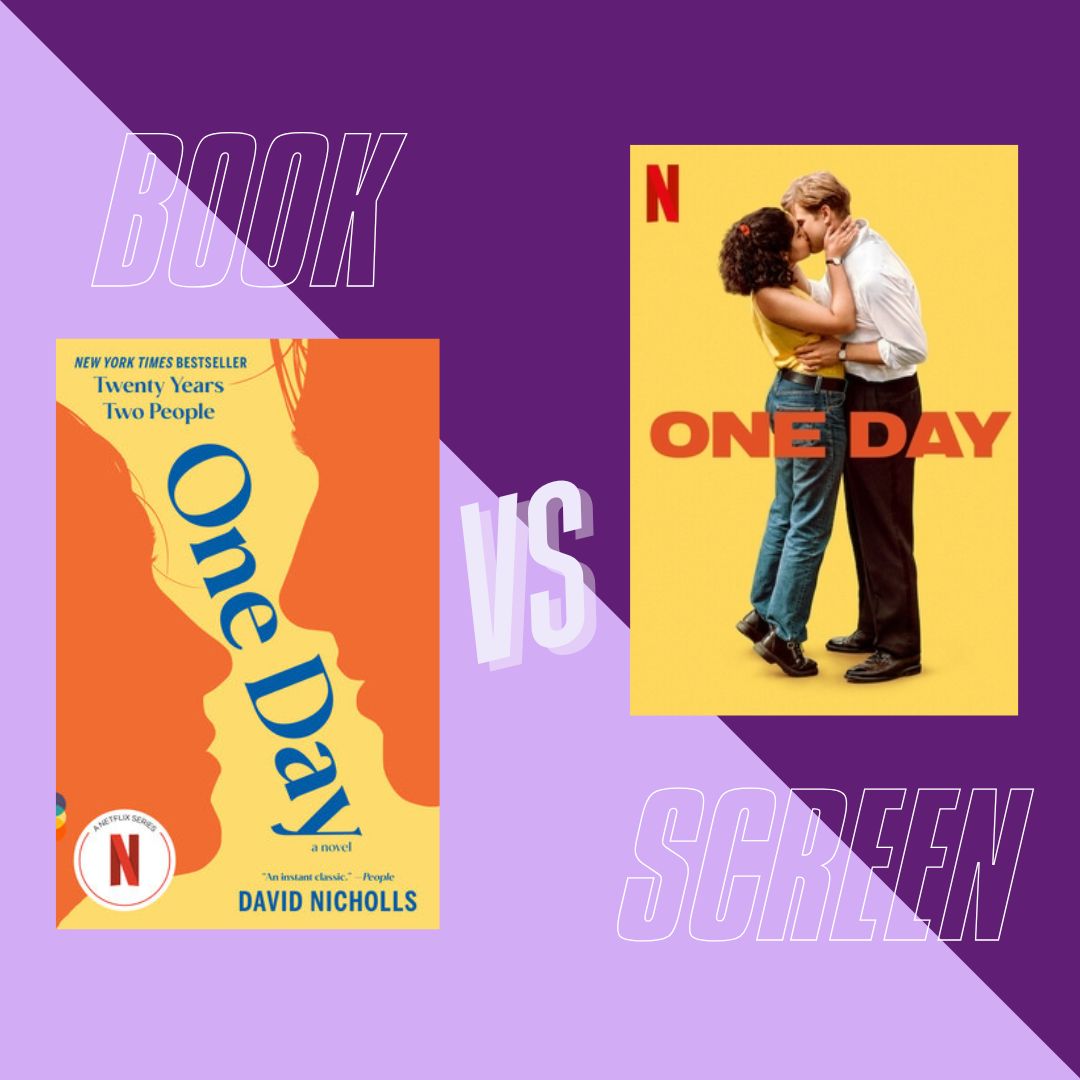
One Day by David Nicholls
Book Published: 2009 | Show Released: 2024 Genre: Contemporary Romance
I’ve read countless books and watched more films and shows than I can name, but oddly enough, I haven’t read many books that have been adapted for the screen — nor have I read the original versions of many adaptations I’ve watched. This puts me in a bit of a dilemma, considering I run a book blog where I post a Book vs Screen comparison every month.
So, I’ve decided that from now on, I’ll make sure to both read or watch one new adaptation each month, rather than relying on ones I’ve already experienced. For two reasons, it’s fresh enough in my mind, and I don’t have to rely on too much research, and it means I never run out of stories to discuss.
So, that’s exactly what I did with One Day. I watched the Netflix series last year when it came out — there was so much hype I couldn’t resist. I cried like a baby through the final two episodes; absolutely heart-wrenching stuff. I really enjoyed the show, and since reading a book usually takes me far less time than watching ten episodes (at least for me), I thought it was the perfect pick for this month.
I told myself I’d finish One Day by Saturday (after making that decision on Thursday), so I wrapped up the book I was already reading, put my current audiobook on pause, and started listening to One Day.
I even began drafting this post that same day — and since I’m usually quite good at holding myself accountable with projects like this, I knew I would be back on Sunday to finish it (it became Tuesday, but hey ho).
This has also been quite an interesting experience for me, as I very rarely watch an adaptation before reading the source material. I think the last time that happened was with Bridgerton Season 1. So I’m really curious to see how this comparison will turn out, especially since I’ve already watched and LOVED the adaptation. There’s also a film version of One Day starring Anne Hathaway from a while back, and I might even watch that at some point and do a TV vs Film comparison. We’ll see!
Now that I’ve read the book and gone back to rewatch key scenes from the show, I feel I can finally make a well-informed and fair Book vs Screen comparison.
Synopsis
15th July 1988: Emma and Dexter meet for the first time on the night of their graduation. Tomorrow, they must go their separate ways.
So where will they be on this one day next year? And the year after that?
And every year that follows? for 20 years
Key Similarities
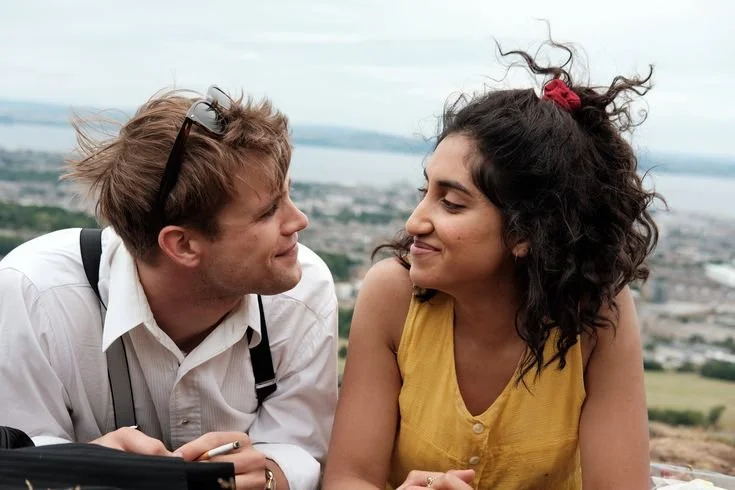
This is easily one of the most faithful adaptations I’ve ever seen. The core storylines and characters remain almost entirely intact, and even specific dialogues from the book are used verbatim in the show. It captures exactly what David Nicholls was telling, just adapted to make it a better viewing experience. The trimming of unnecessary characters and the development of others, like Tilly and her husband, adds depth without straying from the essence of the story.
Characterisation

Leo Woodall and Ambika Mod absolutely embody Dexter and Emma—their chemistry is electric. Leo nails Dexter’s essence: a middle-class prick. There’s never a point in the book where Dexter is traditionally likeable. His charm and laid-back personality coexist with him being a horrendous son, a terrible friend, and an obnoxious, self-aggrandising character throughout. You quickly realise Emma is the only redeeming thing about Dexter—she grounds him, especially in the later chapters. Leo captures this perfectly. Nicholls’s choice to make Dexter a TV presenter brilliantly reflects that hollow middle-class success of 80s/90s UK television, and Leo looks the part.
Emma, ironically, is the best thing about Dexter, yet she isn’t the most likeable character either. Ambika Mod’s portrayal makes her far more compelling than the book version. She retains Emma’s witty, sarcastic, self-deprecating yet slightly supercilious manner, but grounds her in a way that feels authentic. Both characters lean into stereotypes, but for Emma, it works—especially for that era, and even today, where people often define themselves by political stances with little nuance. Watching Emma’s bravado soften as she ages, realising she was performing a persona rather than living as a person, is deeply satisfying.
Emotional Themes
Although I wouldn’t call this a traditional romance, the themes of love, time, and missed chances are absolutely central in both the book and the series. I’m always drawn to stories that explore a whole life rather than a single moment, and One Day does exactly that — it captures two decades of Emma and Dexter’s journey. David Nicholls’ structure, focusing on the same date each year, is such an intriguing choice. The story moves forward chronologically, yet it never feels linear, because most of each year is missing. There’s always this gap — a sense that we’re arriving just as something is happening, but the aftermath and so much more of that moment in time we don’t get to see.
For example, Dexter’s relationship with his mother. In the chapter where he turns up drunk and ruins her visit while she’s still very ill, we get just a small glimpse of how strained things have become. Both in the book and the show, the moment with his father afterwards, followed by Dexter’s emotional call to Emma from the train station, is utterly heartbreaking. We want to see how that fallout unfolds — but the next chapter jumps ahead a year, his mother has passed away, and all we can do is infer how he coped. Based on his worsening behaviour, it’s clear he didn’t cope well at all.
That’s the bittersweet challenge of the book’s structure: the missing pieces make the reading experience slightly more difficult, yet they reinforce the theme that time never waits for anyone — life just keeps moving.
The TV series, however, is perfectly suited to this episodic nature. Each episode feels like a snapshot — a highlight or lowlight from their lives — still rich with depth but paced in a way that feels more fluid emotionally.
“Whatever happens tomorrow, we had today; and I’ll always remember it”
David nicholls
That Dinner Scene
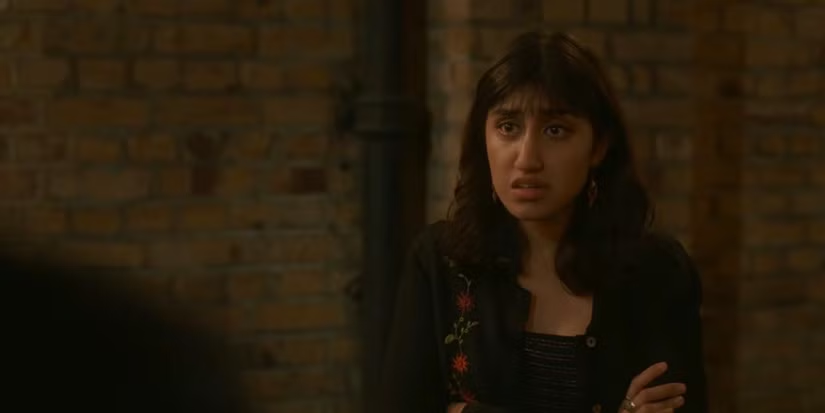
The dinner scene — where everything between them implodes — was one of my favourite parts of the show, so I had very high hopes for it in the book. And honestly, the book delivered.
It’s a major turning point, the moment all of Dexter’s mistakes finally catch up with him. It’s almost tragic that his mother’s illness and death aren’t enough to drive change in him, yet one explosive argument with Emma is. At the same time, it shows the sheer strength of their connection: even when they can’t stand each other, love is always sitting right beneath the surface.
What I love most is how both of their flaws are exposed so starkly. Dexter’s substance abuse, selfishness, and general thoughtlessness meet Emma’s tendency to be condescending and patronising — and with tension already high, it all collapses.
The show captured this moment perfectly. The build-up, the shift when Emma finally snaps, and the dialogue being almost identical to the book made it feel incredibly authentic. I could feel every second of that moment escalating, and the heartbreak hit just as hard as it did on the page.
Main Differences
When it comes to the differences, I don’t think any of the changes weaken the story. That said, there are a few moments I would have loved to see remain faithful to the book.
The most surprising difference for me was realising that the way the show begins is actually how the book ends. I adored this choice in the novel. After spending all that time with Dexter and Emma — and especially after Emma’s loss (sorry for the spoiler!) — returning to those first moments feels utterly devastating. Reading about them climbing Arthur’s Seat, or sharing that kiss goodbye, while knowing everything they go through, carries so much emotional weight. I think that would have worked beautifully in the series, like a final emotional punch or a hidden full-circle moment for viewers.
However, I did appreciate that the show chose to mirror the start and the end visually, and I’m glad they saved the first proper kiss for the final episode rather than including it straight away in Episode 1.
Another omission that stood out to me was Dexter’s trip to India. Given that Emma’s heritage is made explicit in the show, including Dexter casually travelling to India might have created a cultural misstep, so I can understand why it was removed. But in the book, this is where he writes that heartfelt letter — the moment he finally admits how much he loves her and provides a very astute character analysis of Emma, showing that he is one of the few people who can read her correctly and knows her for exactly who she is. It’s a beautiful character insight, and it also marks the first hints of his issues with substance abuse.
Because he’s not in the best place, he ends up losing the book (and the letter inside) in a café, and the woman who finds it keeps it for years. We never see Dexter deal with that lost moment — the book Emma gave him and the message he desperately wanted her to hear — but the emotional implications are huge. It’s one of those moments that quietly reflects how easily things slip away.
I do wish that scene had been included in the adaptation, as it would have given us even richer insight into Dexter’s flaws and feelings, and highlighted another key “almost” in their story.
What Works Better in Each
Book
The book offers a much deeper emotional insight into Emma and Dexter’s inner worlds. We’re fully immersed in their thoughts, fears, and desires — something no screen adaptation can entirely replicate. Novels naturally provide a richer internal narrative because we experience events from within the characters rather than simply observing from the outside.
That level of intimacy gives the book an advantage: we witness moments and feelings that the show can only hint at. In this case, the writing is strong enough to make those internal moments genuinely compelling, adding layers that enhance the story’s emotional impact.
Series
The adaptation, meanwhile, excels in its visual storytelling and performances. Ambika Mod and Leo Woodall are extraordinary — they truly become Emma and Dexter, capturing the full range of joy, heartbreak, and everything in between.
The passage of time is portrayed beautifully as well. Moving from the late 1980s to the early 2000s, the show reflects each era in clever ways — from Emma’s wonderfully dreadful 1980s outfits to the chaotic glamour of Largin’ It, which represents peak 1990s television culture. The small nods to political and cultural shifts across the decades make the world feel alive and authentic.
Even though I wasn’t alive for much of that time, the visual details make each period feel believable and authentic.
Final Thoughts
I absolutely loved One Day. It’s a wonderful story with a clever structure and a compelling premise. While writing this post, I did catch myself wondering whether I loved the book because I was already so attached to the series, or whether I truly loved it on its own terms. But considering how faithful the adaptation is, I think the show shines precisely because the source material is so strong.
The series updates the story just enough for a contemporary audience while preserving the emotional heart and essence of the novel. This is one of those rare cases where I genuinely can’t say one version is better than the other — each medium brings something unique and does it exceptionally well.
I’ve always believed some stories are simply meant to be adapted, and One Day is definitely one of them. It feels perfectly suited to the format of a series, offering the space and time needed to do the characters justice in a way a film might struggle to achieve.
However, I will say this: I cried watching the show, but not while reading the book. I definitely have shed tears over books before, but it takes a very particular kind of sadness to actually make me cry. I think, because I knew what was coming, the book didn’t shock me in the same way — though it was still absolutely heartbreaking.
So, if I have to choose a winner purely on emotional impact, the show edges ahead for me.
Thank you for reading the book vs screen comparison, I hope you enjoyed it and yoy explore my other posts, see you next time!
Signed,