
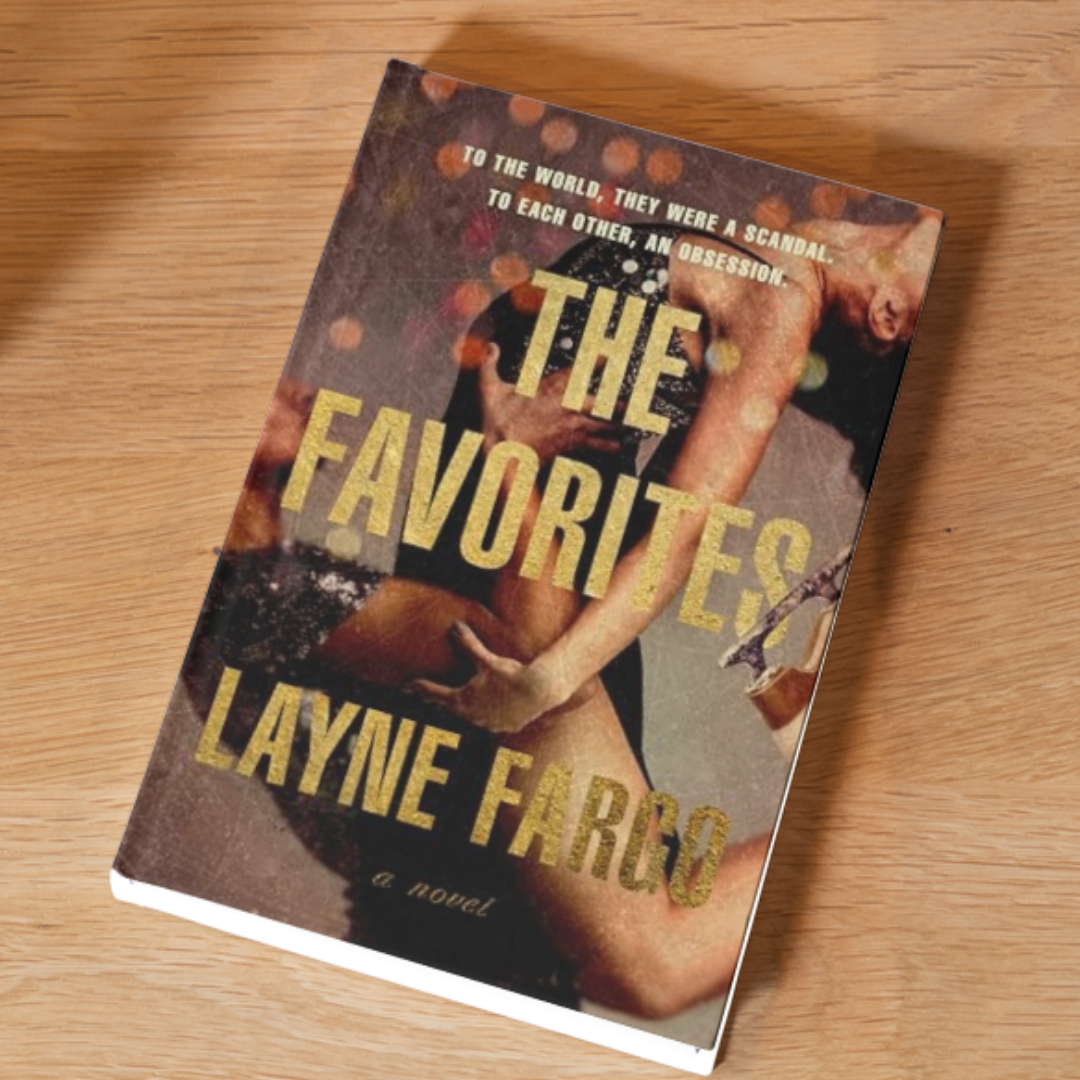
The Favorites by Layne Fargo
Genre: Romance | Published: 2025
It’s always difficult for me to pick books to review. I’m stuck between reviewing the niche stories I frequent and the popular stories everyone is reading. My second issue is that I haven’t read many books recently that I want to review, or that I know I’d enjoy writing about. I’ve read some great books, but for me, a reviewable book either needs to be deeply critical and thought-provoking or have so much going on that there’s plenty to discuss.
The Favorites by Layne Fargo falls into the latter camp. I picked it up because it was compared to Daisy Jones & The Six—a book I love, as it has a similar premise and a documentary-style interview format. So it guaranteed action and a compelling storyline. It was also recommended by a BookToker I really like, so I roped my friend Jess into reading it with me, and we embarked on this crazy journey together.
The overview of this book is that I was loving the story when I started. It was fast-paced, interesting, and insightful. Then the story eventually descends into what I can only describe as telenovela-style melodrama. I was honestly shocked that I was reading the same book. So much to unpack with this one—so let’s get into it.
The Premise
She might not have a famous name, funding, or her family’s support, but Katarina Shaw has always known that she was destined to become an Olympic skater. When she meets Heath Rocha, a lonely kid in the foster care system, their instant connection makes them a formidable duo on the ice. Clinging to skating—and each other—to escape their turbulent lives, Kat and Heath go from childhood sweethearts to champion ice dancers, captivating the world with their scorching chemistry and roller-coaster relationship.
Until a shocking incident at the Olympic Games brings their partnership to a sudden end.
As the tenth anniversary of their final skate approaches, an unauthorised documentary reignites the public fascination with Shaw and Rocha. Kat wants nothing to do with the documentary, but she can’t stand the thought of someone else defining her legacy. So, after a decade of silence, she’s telling her story
Disclaimer – SPOILERS
Strong Start
The story has a really strong start. We’re thrust straight into Kat and Heath’s upbringing—the dysfunction of the family, the loss of Kat’s dad, and her brother being an abusive addict. So much of who they are is defined by their upbringing and lack of support, both financial and emotional, especially considering that, at this stage, they are just children. Kat’s determination and ambition are at the forefront of everything she does and every decision she makes. It is clear that Heath’s driving force is Kat, and his passion for her carries his passion for skating; however, it is not a priority for him, something that will come back to be problematic in the future.
The story is very fast-paced—there isn’t a moment of pause in the first half of the book. we dont linger too much on individual moments, and I very much appreciated this.
I really enjoyed the in-depth look at the skating community: its elitism, the struggles for unprotected children, and what that means for their ability to be exploited, which we see clearly in Heath and Kat. I think Fargo does a great job of capturing both the beauty and the cut-throat nature of the sport.
Layne Fargo’s tone of voice is clear and sharp, perfectly embodying the personality of her main character. Everything we learn about Kat is solidified by the tone of voice used as she recounts her story, and in the moments we stray from her to the documentary segments, that shift in voice is very clear in the writing. Fargo’s strength in this story is the clarity with which she defines Kat Shaw. In fact, the whole story’s strength for me is Kat Shaw. Even toward the end, when the story starts to derail, Kat is still the most defining piece and the most disrespected character.
Where It All Went Wrong
Layne Fargo spends so much time building us up, investing heavily in the heightened emotion of these games, that the eventual payoff feels thin. Instead, the narrative becomes a relentless sequence of setbacks, with little emotional resolution. The book, while still moving through moments, loses the strong pacing at the start, and we start to slog a bit more through the narrative.
Kat and Heath are so consistently melodramatic when they’re together that it begins to bleed into every interaction and every plot point thereafter. Disaster is always imminent: a blow‑up, a betrayal, something going wrong just before the biggest moment of their lives. For characters supposedly driven by ambition, it’s difficult to believe they would allow so much to derail them.
The obstacles start to feel manufactured—conflict for conflict’s sake—rather than serving the story in any meaningful way. At this point, I began to question Fargo’s ability to steer the narrative toward a satisfying conclusion. I had no issue with the characters never winning or continually falling short of Olympic gold, but the reasons for these failures don’t sit comfortably within the logic of the story. Plot twists and betrayals feel theatrical rather than truthful, and the characters begin to act for drama rather than from genuine motivation.
I might have been able to overlook much of this if not for the final two sections of the book. The story is divided into parts that track each stage of their lives, and Part Four—covering the Olympics and the scandal that ultimately tears them apart—is where everything fully derails. What begins as a story about ambition, cycles of trauma, and success against all odds abruptly transforms into something closer to a telenovela. What should have been a deep, unfiltered look into codependent relationships and their development through age and changing times becomes surface-level conflict machines.
Suddenly, we’re dealing with cheating, Russian mafia ties, attempted murder, side babies, and then—somehow—a bizarre throuple-slash-ten‑year situationship. The tonal shift is so extreme that it’s jarring. You’re left wondering how on earth we got here, and more importantly, why. The grounded emotional stakes the novel once relied on are buried beneath increasingly crazy twists, until the original story feels almost unrecognisable from its origin.
Characters
Heath
I never particularly warmed to Heath, but from the beginning, I was curious about his perspective—especially what was going on in his head when they joined the skating school. For someone whose commitment to skating is so clearly driven by his devotion to Kat—bordering at times on obsession—I was interested in how the shifting tides of their relationship might look from his point of view. When the story moves into their separation, I expected his eventual return to be marked by some form of growth or self-awareness.
Instead, Heath is never developed beyond his fixation on Kat. This remains his defining trait throughout the novel, and we learn very little about who he is outside of that obsession. Whatever fragile image we have of him is further damaged when he’s revealed to be a cheater, and the final chapters completely ruin his character for me. Rather than deepening or complicating him, the narrative flattens Heath into a source of repeated disappointment, with no meaningful evolution to justify his continued presence.
Katarina
Katarina is the best part of the story—and somehow the most misused by its end. She was clearly destined for greatness, which makes it all the more frustrating to watch Heath Rocha repeatedly derail her trajectory, only for her to be trapped in an endless situationship with him. By the end, she’s expected to play step‑mum—or aunt—to his bizarre side baby, conceived with someone who is meant to be her best friend. It’s a development so jolting it throws the entire arc into disarray. What becomes of Katarina feels almost insulting, and I hated it so much.
Outside of this, Kat is a flawed but compelling character. She is unapologetically herself, fiercely determined to become who she believes she is meant to be. Stories about women driven by success often linger on the so‑called “ugly” side of ambition—but I don’t believe there is anything ugly about it. If Kat were a man, we wouldn’t hesitate to admire her single‑mindedness. She fought for everything she had in an elitist sport where money, power, and influence were stacked firmly against her. She is complex and polarising —you will either love her or hate her. While I didn’t agree with all of her choices, I respected her ambition. And above all, she deserved so much better.
The Romance
I didn’t care for the romance at all—and it is, for me, the most damning aspect of the story. Where Layne Fargo’s writing truly falls flat is in the romance between Kat and Heath. We are repeatedly told why Kat and Heath love each other, but we are rarely shown this in their actual interactions. Their relationship is defined almost entirely by codependency, with every moment laced with tension—largely driven by Heath’s constant fear of losing Kat.
This dynamic is rooted in his backstory as a foster child who met Kat young and attached himself to her as the only constant in his life. There is so much of this to have explored that would have transformed Heath’s character arc, and it just isn’t. However, while it does explain his fixation, it does not translate into a convincing or compelling love story. There are no meaningful professions of love, no genuine sense of commitment, and very few moments of joy between them. They never seem truly happy together, which makes it difficult—if not impossible—to root for them as a couple or believe in their supposed chemistry.
Heath consistently makes choices that directly contradict the depth of love we’re told he feels for Kat, yet we’re still expected to accept that they are soulmates. Bella repeatedly sabotages Kat, and yet Heath decides it’s acceptable to essentially cheat with her after what amounts to a trivial argument. Even following their separation, there is no real apology or reckoning on Heath’s part. He is simply allowed back into Kat’s life for the sake of another Olympic run. He never tries to win her back, never earns redemption, and yet is still rewarded with her presence. Worse still, he gets to keep her while having a child with her former best friend.
None of this makes sense, and I refuse to accept this as a positive—or even neutral—representation of love. That this resolution occurs at the very end of the story only highlights how little growth or development any of the characters ultimately experience.
Final Thoughts
There are many other characters and plot points in the story, who might have been worth discussing, especially Bella, but I didn’t like her either by the end, despite her also starting as a very compelling character.
With that said, the book is undeniably captivating—it draws you in, and I went into it with high expectations thanks to the glowing reviews and its promising opening.
I often enjoy messy, toxic, drama-filled stories, but this one didn’t feel like it was set up to be that kind of book from the beginning. As a result, its eventual descent into chaos feels disjointed rather than intentional. I also never formed a strong enough emotional connection to the characters, and the increasingly questionable plot choices severed what little connection I did have. This had the potential to be a five-star read, but it ultimately missed the mark entirely.
Thanks for reading!! Make sure to check out my other reviews!
Signed,








I’ll be back after I read the book