
All Her Fault by Andrea Mara
Book Published: 2021 | Show Released: 2025 | Genre: Thriller
I saw the first scene from the All Her Fault TV show on Twitter and immediately knew I had to watch it. I’m not really a TV show person these days, but when I find something I love, I’m all in—so it takes a lot to pique my interest. I started All Her Fault at a family friend’s house and ended up finishing it that same Sunday because I just had to know how it ended.
I really enjoyed the show, and I didn’t even realise it was based on a book until a couple of weeks later. I’d been meaning to read it for a while, and then remembered I needed a book-to-screen pick for May—so here we are.
As far as adaptations go, I think the show does a great job of capturing the essence of Andrea Mara’s story. That said, quite a bit has changed to heighten the stakes and make it more tense for a visual medium. Interestingly, I think I enjoyed the show more than the book for several reasons—which I’ll get into in this post!
This comparison is going to be structured around the major changes and those I found most impactful. I don’t touch much on the acting in the show in this post, but just to point put Saran Snook was phenomenal, and Jake Lacy captures that secretive sleaziness of Peter Irvine perfectly.
Synopsis
ONE MISSING BOY.
Marissa Irvine arrives at 14 Tudor Grove, expecting to pick up her young son Milo from his first playdate with a boy at his new school. But the woman who answers the door isn’t a mother she recognises. She isn’t the nanny. She doesn’t have Milo. And so begins every parent’s worst nightmare.
FOUR GUILTY WOMEN.
As news of the disappearance filters through the quiet Dublin suburb and an unexpected suspect is named, whispers start to spread about the women most closely connected to the shocking event. Because only one of them may have taken Milo – but they could all be blamed . . .
IN A COMMUNITY FULL OF SECRETS, WHO IS REALLY AT FAULT?
Major Changes
Setting
One of the biggest changes is the setting: the book takes place in Dublin, while the show moves events to Chicago. At first glance, that might seem inconsequential, but it has major implications for the way in which the kidnapping plays out in the community
In the book, the community itself feels like a character. There’s a strong emphasis on how people respond to the kidnapping — the rumours, the judgements, the whispered conversations, and the way everyone seems to know everyone else’s business. In a close-knit community, every move is watched, commented on, and interpreted.
That sense of scrutiny is much less present in the show. Aside from Jenny, there’s very little focus on how the wider community reacts, because that same tight-knit dynamic simply isn’t there. Moving the story to a larger city changes the social context, and with it, the way the fallout unfolds.
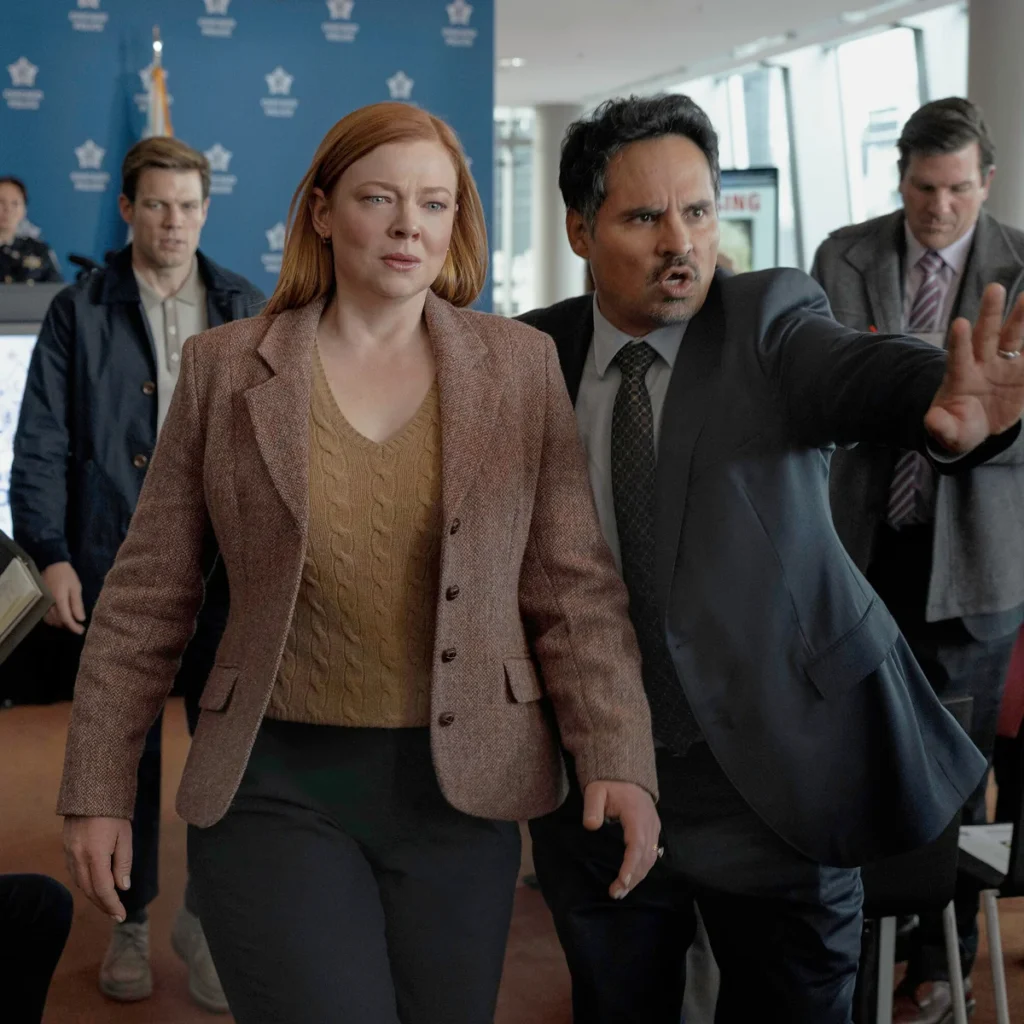
Where the show does choose to explore that scrutiny is through the media and social media, particularly in the way Marissa is criticised for what is perceived as her negligence. The reporters’ news coverage shows a stronger focus on how quickly blame is assigned in a high-profile case.
One thing I really liked, though, is how closely the book and the show open. That first nerve-racking interaction Marissa has with the woman in the house she’s sent to is almost identical in both versions, and it immediately creates the same tension that makes the opening so effective.
Peter, Brian & Lia
The part I was most shocked about in the book was how little role Peter’s siblings played. Lia, in particular, only shows up right at the end and is given so little depth that she doesn’t feel necessary as a character. In contrast, I think the show really excels in its character studies. We learn a lot more about Peter leading up to the final twist, and while the twist is still shocking, it also makes sense. You start to notice his controlling tendencies with his siblings, his willingness to do the wrong thing to get what he wants, and how secretive he is. Because of this, the reveal feels earned.
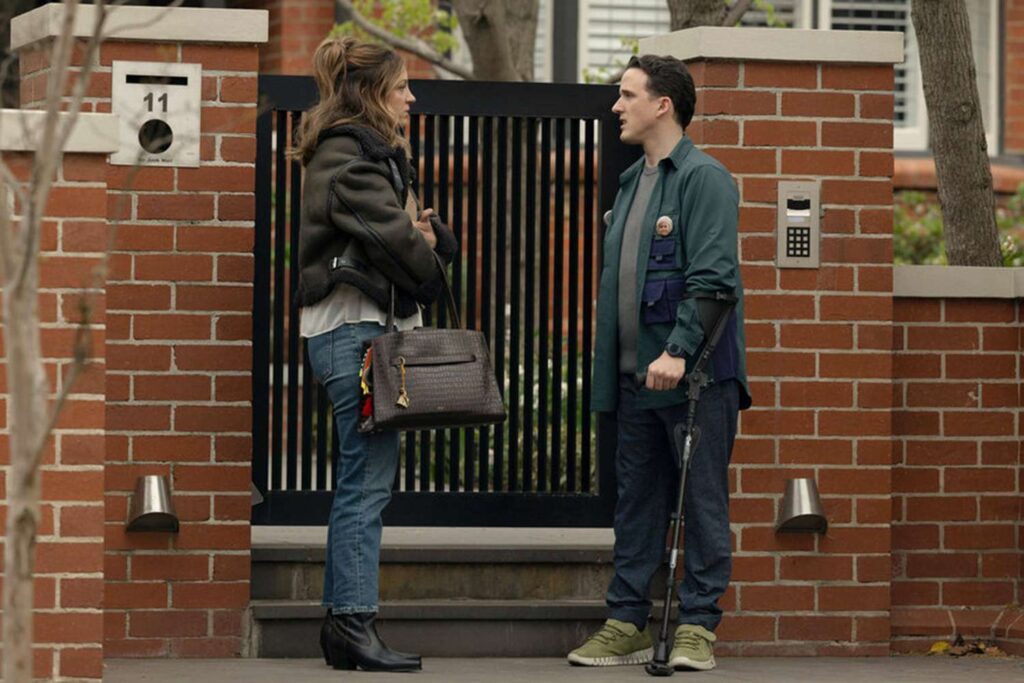
The sibling dynamic that led to Brian being disabled and Lia being a fuck up, due to the trauma of disabling her brother and Peter being the older and more responsible on defines all of their interactions. Brian being infantilised, Lia not being trusted and Peter’s control. Learning at the end that Peter was actually responsible for Brian’s accident and also being responsible for Milo’s disappearance ties it all together.

I think the book prioritises shock value, whereas the show leans into character development—and I really preferred that. Even Peter’s death feels symbolic in the show, reinforcing his role as this overarching agent of chaos from beginning to end. The show also allows its own twist and shock value moments in those reveals, which is why it makes sense that Peter is at the helm in some aspects; we still can’t believe it.
Relationship with Jenny
Jenny is just as important in both the book and the show, but her storyline unfolds quite differently.
Both versions keep key elements of her story — including Cari having been her babysitter, and the tensions that it creates — but the show expands far more on her marriage. It leans into the strain of her being the higher earner, paired with a husband who is, frankly, deeply underwhelming as both a partner and a father.
The book takes a different route. While it makes clear that her marriage is under strain, it focuses more on her relationship with her mother-in-law and the criticism she faces as a working mother. That external judgement becomes a larger part of her story. Her husband also comes across quite differently on the page — he’s not portrayed as the outright useless man we get in the show, but rather as someone more complicated and, to some extent, misunderstood.
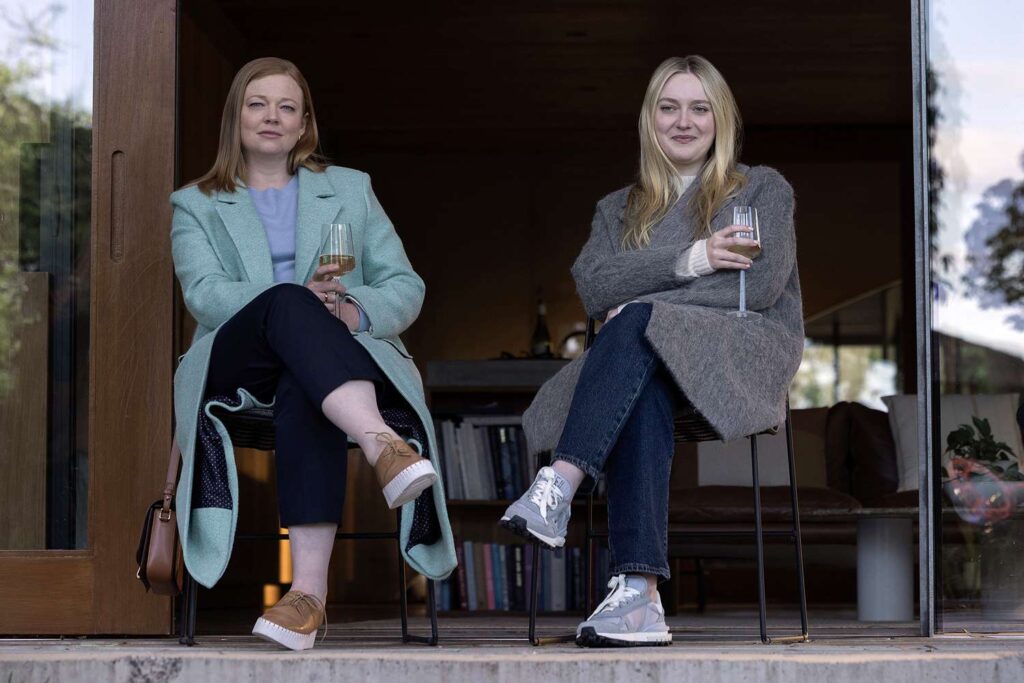
The relationship between Jenny and Marissa also shifts. In the book, they do form a connection, and Jenny becomes a source of support for Marissa, but it remains more understated. The show gives that relationship much greater emotional significance, building it into one of the central dynamics by the end. It almost turns into a kind of chosen-family arrangement, with the two women raising their children alongside one another and forming an even deeper bond.
That final sense of shared motherhood doesn’t really exist in the book — or at least we never see it develop in the same explicit way.
Detective Alcaras
In the book, Detective Alcaras is a woman, not a man. She exists largely as part of the investigation, with very little attention given to who she is outside the case.
The show takes that character in a completely different direction, expanding him into a much fuller figure. We see his family, his struggles, and, most importantly, his autistic son and the level of care and support he needs. At first, this subplot can feel disconnected from the main story, and it’s not immediately clear why so much time is devoted to it.
By the end, though, it becomes clear that the writers are using his storyline to reinforce one of the show’s core themes: understanding what people are willing to do for their children. What initially feels like an unnecessary detour ends up feeding directly into the emotional logic of the climax and helps sharpen the story’s larger message.
Irene
Irene plays a much larger role in the book. As Cari’s mother, she gets a substantial backstory, and her perspective is one of the main POVs. Through her, we learn a great deal about Cari’s childhood and begin to understand why Cari is the person she becomes.
Andrea Mara’s book presents Irene as cold, emotionally distant, and motivated largely by self-interest. Even in the aftermath of everything that happens, she often seems more concerned with what she can gain from the story than with Cari herself.
The show gives her far less attention. She’s present enough to establish a few defining traits — her distrust of the police and her reluctance to share information — but beyond that, there’s very little exploration of her character.
Ending Comparison
I really liked the decision to change the ending so we actually get to watch it unfold, rather than learning about it the way the book presents it — through an almost detached epilogue-style newspaper clipping. Seeing it happen on screen gives the final choice much more emotional weight.
Watching Marissa make that decision for the safety of her child, and seeing everyone around her understand exactly why she did it — and ultimately support that choice — lands far more powerfully. It brings the moral ambiguity of the story into full focus, because by that point, the question is no longer whether it was right, but whether anyone in her position would have done differently.
“Her husband was no ally. There were many chinks there, chinks they were both hiding from the rest of the world. But nothing gets past the person who lives in your house, the person you entrust with your child.”
Under showrunner Megan Gallagher, the adaptation expands the novel’s themes of love, control, and deeply buried family secrets, making it far more character-driven than a straightforward thriller. The ending especially ties that together well, because it crystallises what the story has really been building towards: family, children, and the things people are willing to do — or overlook — when they believe they are protecting them.
Minor Changes
There are a few other changes in the show that subtly alter how the story unfolds. Colin’s involvement, for example, is adjusted slightly, but he still ultimately plays the key role in leading Cari to Milo. The sequence of deaths also changes, along with who is responsible for certain deaths in each version.
Overall, the main shape of the story remains intact, and most of the major twists are preserved. The adaptation keeps the central mystery and key revelations recognisable, but it isn’t the most faithful adaptation. It follows the same framework while making enough structural and character changes that the experience of each version feels distinct.
What Each Does Better
What the show does particularly well is sharpen the story’s central message. It makes the moral ambiguity of nearly every character much clearer — some are obviously worse than others, but almost everyone exists in a grey area. It also builds more deliberately towards the question of what people are willing to do for the people they love, and what they are willing to ignore, excuse, or actively cover up in the name of protecting family. I think the show ultimately captures that broader message better than the book. It feels more intentional in what it’s trying to say.
Interestingly, the book is called All Her Fault because both the book and the adaptation spend a lot of time showing that, in many ways, almost everything can be traced back to the men involved, which makes the title feel slightly like deliberate misdirection, but also that emphasis on how, no matter what, it’s always a woman’s fault.
“When you’re a woman, you’re never ‘right’. No matter what you do, it’s still your fault. For everything. Always. Always.”
Andrea mara
What the book does better is depth. It offers a much more intimate understanding of the families, their dynamics, and their internal thought processes. You spend so much time inside these characters’ heads that you understand not just what they do, but why they do it. The show has to externalise that through dialogue and action, and while it does that well, books will almost always have the advantage when it comes to interiority.
I’d also say the book is subtler. The stakes feel just as high in both versions, but the book allows things to unfold more quietly, whereas the show is much more overt in how it presents certain emotional beats and revelations.
Final Thoughts
While I really enjoyed All Her Fault, I enjoyed the show far more. I was hooked almost immediately and found it incredibly engaging from the beginning. Reading the book afterwards was a strange experience because I was constantly comparing scenes, noticing what had changed, and trying to map one version onto the other.
That said, because the adaptation makes some genuinely significant changes, there came a point where I had no idea how the book would end. It diverges enough that the twists still work, even if you already know the basic premise.
I do think this is one of those stories where you’re probably better off choosing one version rather than doing both. Thrillers rely so heavily on surprise, and adaptations inevitably change how those twists land. Once you know where a story is going, a lot of that original tension disappears.
I’ve seen quite a few people who read the book first dislike the show because it changes so much, and that can make it hard to judge the adaptation on its own terms. You end up focusing on what’s missing rather than whether it actually works as a separate piece of storytelling.
For me, the show is excellent in its own right, and the book is a strong read — but if I had to choose, the show gave me the better experience overall.
Thank you so much for reading! Please check out my other Book vs Screen posts!
Signed,