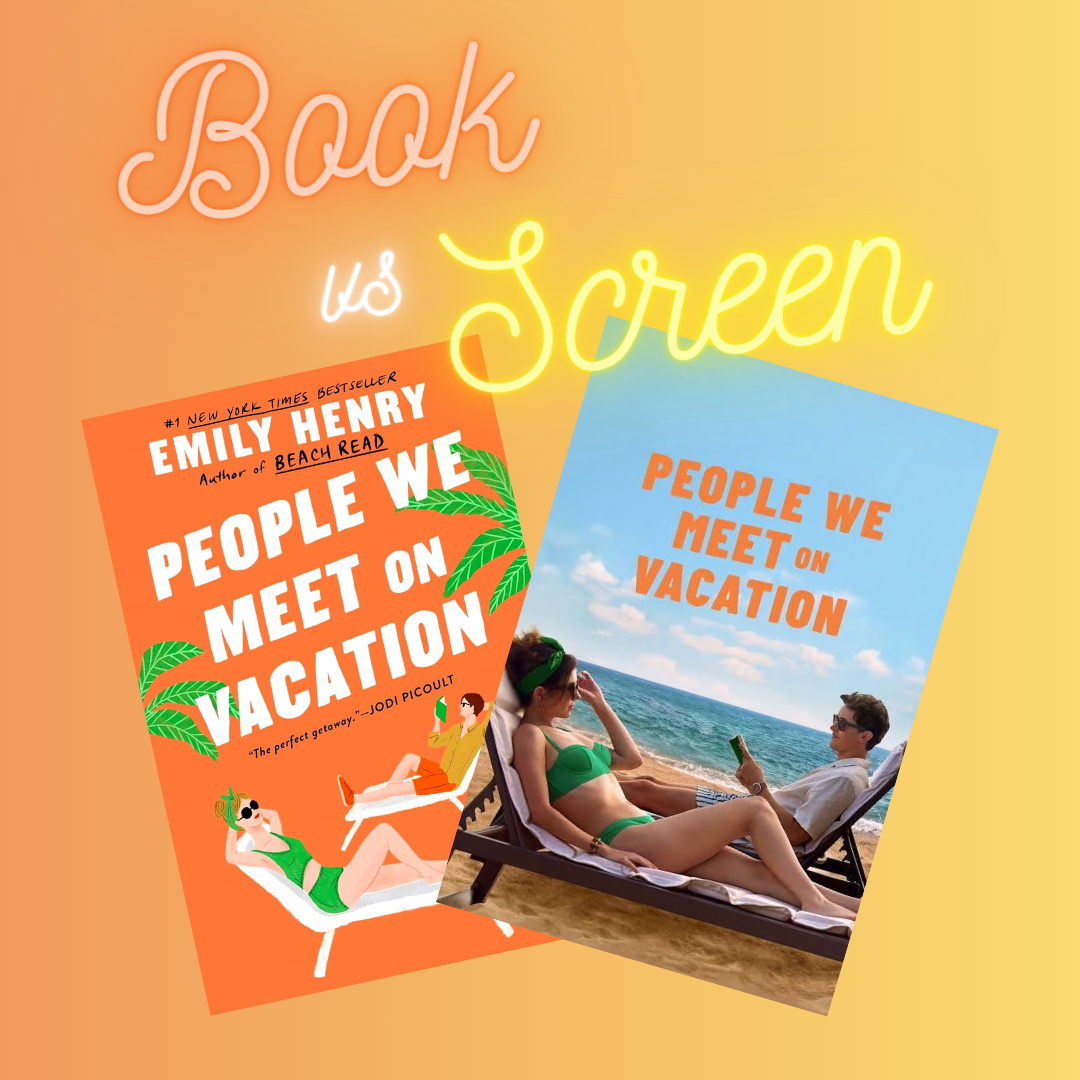
People We Meet on Vacation by Emily Henry
Book Published: 2021 | Movie Released: 2026 Genre: Contemporary Romance
Welcome to the first post of our month of love! Focusing on all things romance!
Before I start this post, it’s important to point out that Emily Henry and I, as far as books go, are merely acquaintances. I’ve read three of her novels, but they’ve never really blown me away, nor have I ever felt a strong urge to seek her out. Usually, if I’m between reads and happen to come across one of her books, I might pick it up just to pass the time.
That said, I’ve enjoyed most of what I’ve read by her so far. Funny Story is probably the one I liked the most, and I read Happy Place in December, which took me a while to get into, but I ended up appreciating how it played out—particularly the way she blends emotionally heavy topics with the familiarity of a happy-ending romance.
Now, I watched The People We Meet on Vacation on the plane to Nigeria at the beginning of January. I don’t actually watch rom-coms that often anymore, as I find that romance films rarely provide the same level of satisfaction as romance books. Still, I downloaded it on a whim and decided to give it a go. I enjoyed it more than I expected, and I’ll go into a deeper analysis later on.
I liked it enough to think that the source material must have something for me. There was, however, something missing in the film, and I was curious to see whether the book would provide that missing piece. So here is my honest review and comparison of the book and screen adaptation of The People We Meet on Vacation by Emily Henry.
Synopsis
12 YEARS Poppy and Alex meet. They hate each other and are pretty confident they’ll never speak again.
11 YEARS They’re forced to share a ride home from college, and by the end of it, a friendship is formed. And every year, one vacation together.
10 YEARS Alex discovers his fear of flying on the way to Vancouver.
Poppy holds his hand the whole way.
7 YEARS They get far too drunk and narrowly avoid getting matching tattoos in New Orleans.
2 YEARS It all goes wrong.
THIS Summer Poppy asks Alex to join her on one last trip. A trip that will determine the rest of their lives.
Do the Characters Feel the Same?
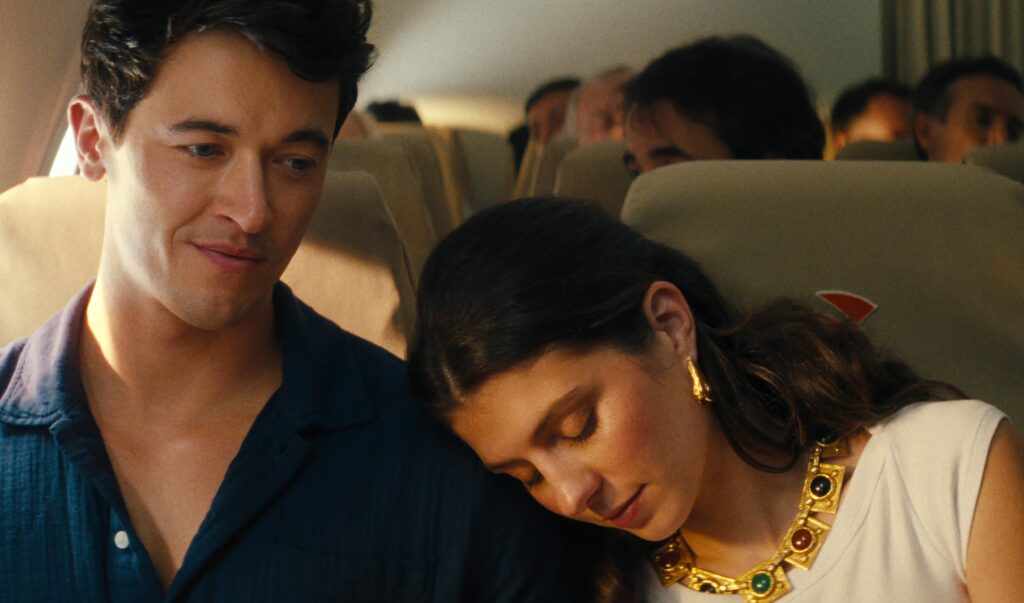
As far as casting goes, these were excellent choices. Emily Bader is stunning—so much so that throughout the film I couldn’t get over how beautiful she looked, especially her hair. She is completely enthralling as Poppy, and I think she captured the very essence of how Poppy is written in the book. The personality, energy and charm are all there, and we experience her much as we do on the page: largely at surface level, with a sense of deeper layers that remain mostly unexplored.
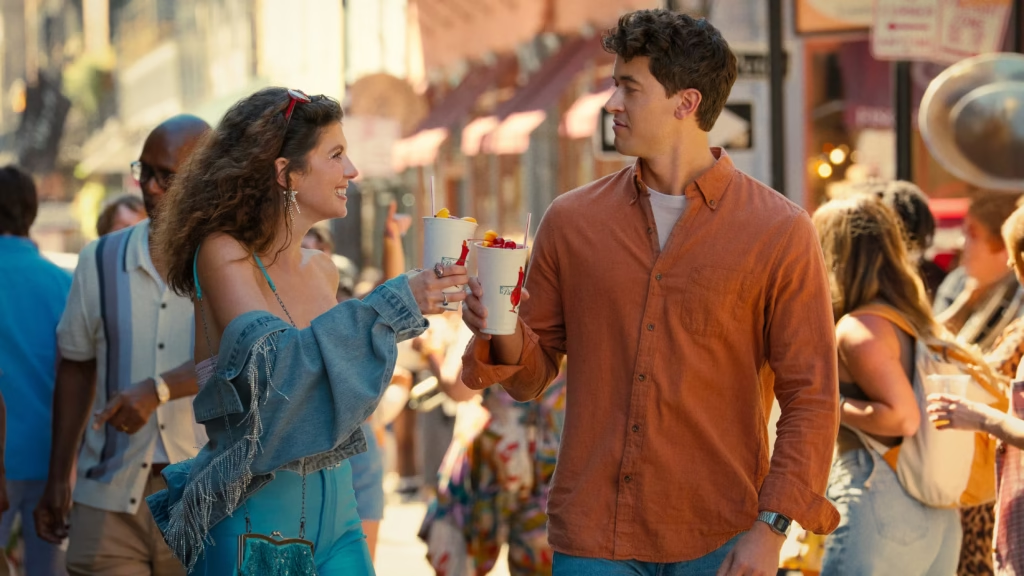
Now, Tom Blyth—we all know he’s a sight for sore eyes. I first fell in love with him as the young President Snow in the film adaptation of The Ballad of Songbirds and Snakes, and I think he is also a near-perfect piece of casting here. He embodies the quiet appeal that defines Alex so well: not over the top or flashy, but reserved, grounded, and very much the emotional core of both himself and Poppy.
They definitely had strong chemistry. In fact, this is what really carries the film for me in terms of attraction and in selling the underlying yearning that wraps around Poppy and Alex in almost every scene they share.
As for the other characters, they all feel very much in the background. I remember thinking while watching that we don’t really seem to care about anyone else but these two, and I wondered if that was also true of the novel, and it is, though to a lesser extent, as her parents do play a stronger role in the book. This is usually an issue for me, as I think supporting characters can make or break a narrative, and the world around the protagonists needs to feel properly fleshed out. But I suppose in a friends-to-lovers story, we don’t always get the same depth of interaction with side characters, because the person who knows both
Changes: What Was Cut, Added, or Altered?
There are some major plot changes. In fact, the entire trajectory of their relationship is altered: how they meet, their first interaction, their first trip together—almost everything. In the film, they meet at school at the beginning of the year rather than during the summer drive home, and that whole road trip doesn’t happen that way. Instead, the film rearranges and stitches together moments from the book in a different sequence. For example, Alex’s fear of flying is combined with his meeting Poppy’s parents for the first time, whereas in the book, we discover his fear while they’re actually on the plane.
Some of the smaller, charming anecdotes, like Buck’s water taxi, do still appear, but even that trip plays out differently. They go on far, far more trips together, which gives us more insight into their relationship.
The entire wedding storyline is also changed. Poppy isn’t invited, and it doesn’t take place in Barcelona. In fact, the present-day trip in the film is Poppy’s attempt to salvage their relationship one last time, rather than her lying about the trip and whether or not she can go, as she does in the movie.
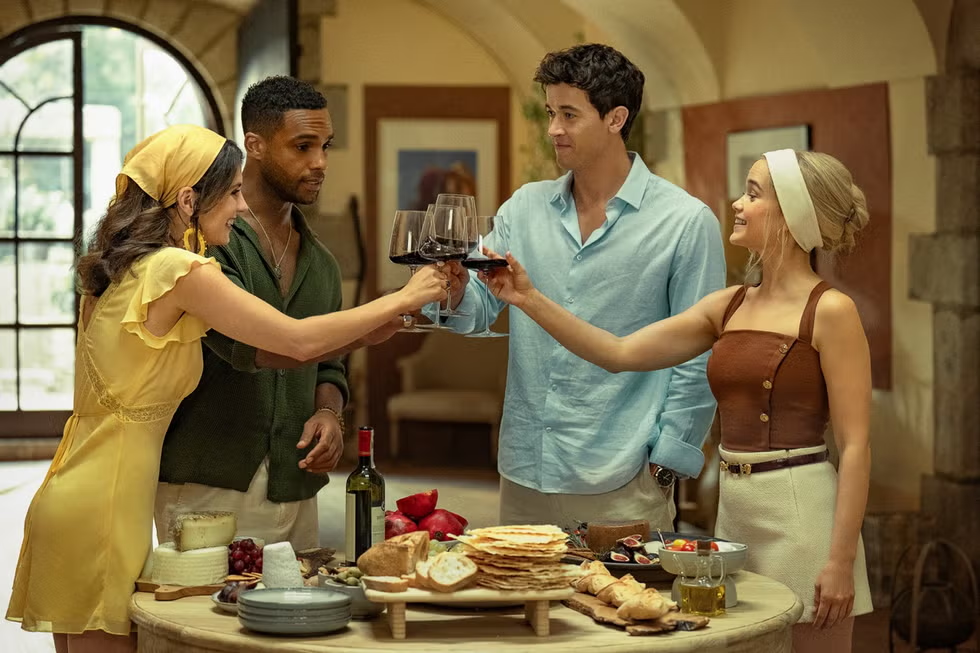
While Sarah is an important part of Alex’s story in both versions, her role is far more significant in the film than in the novel. In the movie, Alex leaves Sarah of his own accord because he realises he is in love with Poppy and can never feel the same way about Sarah. There is no engagement, and the big falling-out that happens in Tuscany in the film doesn’t unfold in the same way in the book and also happens earlier on.
Finally, the part of the story I most wished had made it into the film is the Croatia trip. The book loosely merges this with the Tuscany timeline, but it is a crucial section of the narrative because it happens entirely separate from Sarah and their respective exes. It’s the trip where they finally get together, but a huge miscommunication—along with the fact that they’re both slightly intoxicated—means that although they end up kissing, they aren’t able to express their true feelings for each other and both end up feeling rejected. This is actually the last time they see each other before the present-day storyline.
Those chapters add so much weight to their bond, their emotional tension, and the tragedy of their missed timing—something the film never quite captures. In the movie, it feels more like Poppy is angry about Alex settling down, rather than truly being in love with him.
Emotional Depth & Romantic Tension
To be completely honest, outside of the general premise of Poppy and Alex’s relationship, almost none of the film follows the same linear narrative as the book. From the very first chapter, I felt that the story I had watched was not the same story I was reading. In fact, I would go as far as to say this is one of the most unfaithful adaptations I’ve ever encountered.
That’s not to say that Poppy and Alex’s relationship itself isn’t translated effectively, but rather that the order of events and the way the central storyline unfolds are fundamentally different.
The main issue I had with the film was its lack of emotional depth. I enjoyed how their love story was presented in the present timeline, and it was clear there were unspoken feelings between them. However, the flashbacks did very little to convince me that this love had been building over the years.
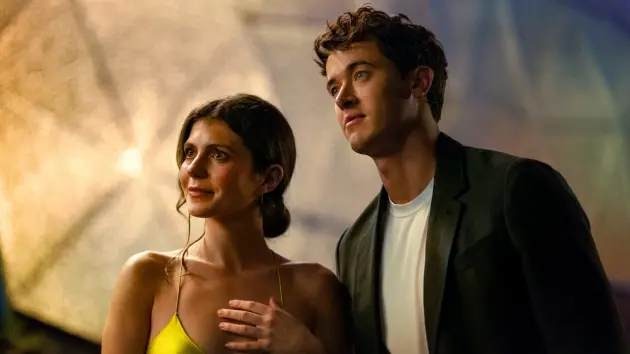
There was almost no real context for the strength of their bond, and I felt the film simply didn’t do enough to show us why these two people mattered so deeply to each other. This is one area where I think the book does a far better job. Their story spans twelve years, and each year gives us a more intimate look at their relationship and how it evolves.
Through this structure, we understand Poppy’s avoidant nature much more clearly, both through the men she dates and her complicated feelings about her job. We also come to appreciate Alex’s stability, and the contrast between them becomes more pronounced. As a result, their mutual hesitations make far more sense, and their emotional barriers feel earned.
In the film, the romantic tension doesn’t really become apparent until the very end of the Tuscany trip, with the near-kiss. Even then, it doesn’t feel driven by deep romantic feelings. We’re told that it is, but it comes across more as a heat-of-the-moment interaction than the culmination of years of suppressed emotion. It’s only after their big argument that all the feelings suddenly spill out, which feels rushed compared to the slow, layered build-up we get in the book.
“I still have a lot to figure out, but the one thing I know is, wherever you are, that’s where I belong. I’ll never belong anywhere like I belong with you.”
emily henry
Themes: Did They Translate?
The friends-to-lovers trope is much stronger in the book. Alex and Poppy are best friends—there is no one else but them, and no other relationship really compares. In the film, however, they just feel like friends. I think the intensity of their connection and the depth of what their relationship represents are significantly reduced.
In fact, their entire relationship in the film is more or less confined to the summer, whereas in the book it exists all year round, despite them living in different cities. That change alone diminishes the sense of closeness and emotional dependency between them.
The whole ‘timing and missed chances’ element also doesn’t translate as well on screen. Again, because we don’t develop that strong emotional connection until quite late in the film, it doesn’t feel like years of missed opportunities. Instead, it feels more like two people who suddenly wake up one day and realise they love each other, rather than a slow, simmering tension that has been building beneath the surface for years.
That said, in terms of vibes and aesthetics, I think the film gets it absolutely right. It’s colourful, bright, and visually appealing. The holiday settings look great, and the use of travel and different cities works really well.
It definitely looks and feels like an Emily Henry story, just maybe not exactly the one she wrote.
Which Version I Prefer
I don’t usually make strong judgments about book-versus-screen adaptations, but despite all the changes, I actually enjoyed the film more than the book. In fact, if I’d never read the book, I would have been completely satisfied with what I watched. Even though I finished the film feeling like something was missing, the emotional core remained. I was still smiling, still rooting for them, and still gushing when they finally got together.
I didn’t enjoy the book as much. It took me a surprisingly long time to read—almost three weeks, which is unusual for a 360-page novel. While the book did provide the emotional depth I felt was missing from the film, I didn’t connect strongly with much else. Though it’s a bit of a shame, I also knew just a couple of chapters in that I wasn’t fully invested, so I’m not necessarily disappointed.
I think part of the reason I enjoyed it less is that, compared to other Emily Henry books I’ve read, this one felt like it had much lower emotional stakes, both within the central relationship and in the surrounding narrative. That’s usually the element I enjoy most about her writing, and here it just didn’t hit in the same way.
Final Thoughts
Ultimately, I think anyone who watched the film and loved it probably shouldn’t read the book. And if you’ve read the book and absolutely adored it, I wouldn’t really recommend watching the film either. However, if you feel fairly neutral about one or the other, it’s worth exploring both. The film, in particular, is genuinely enjoyable and works well as a light, satisfying watch that exists very well as its own entity. I definitely had a good time with it and would recommend it as a fun rom-com to anyone, especially those who have no intention of reading the books.
Thank you for reading this book vs screen comparison. I hope you enjoyed it, and you explore my other posts. Our month of Love is just starting, so see you next time when I delve deeper into romance books!
Signed,