Romance as My Genre of the Month
I do find it slightly ironic that, despite making it very clear here that romance is my favourite genre, it has never actually featured in one of my “genre of the month” posts. So it only felt right to end this month with a proper deep dive into the genre I return to most often and why it consistently tops my reading statistics
While drafting this, I realised I was slowly drifting into an entirely different question: what actually makes a good romance? That deserves a post of its own — and probably several, if I’m honest. There is also much to unpack about the romance industry, its trends, and the subtle ways it shapes how women imagine love and relationships, a conversation I would like to approach from a critical lens.
For now, though, I want to focus on something more personal: why I love romance, what I look for when I pick one up, and which kinds of stories truly fulfil that brief for me.
What I Look For in a Romance
Romance is, without question, my comfort genre. It’s what I return to when I’m bored, when I’m in a reading slump, or when other books feel like too much work. It’s less of a planned reading choice and more of a reflex. I rarely add romance to my TBR with the same deliberation I apply to other genres; I’m almost always in the mood for one, so I’ll pick it up when it appears rather than scheduling it like I have to do with many other reads. It’s the genre I’m most likely to drop my plans for. That said, comfort doesn’t necessarily mean light or low-stakes.
While I do enjoy cosy, easy romances from time to time, they’re not actually the stories that satisfy me most. The romances I love — the ones that linger — have substance. They give us fully realised individual arcs alongside the central relationship. They explore the human condition: loneliness, trauma, fear, grief, vulnerability, and so much more. They show us not just why love feels good, but why life can feel hard — and why connection makes it worthwhile.
The Emotional Payoff
When I really break it down, my love of romance rests on one main thing — emotional payoff.
There are plenty of tropes in the romance genre, and I mostly don’t discriminate, as even within trope execution, you can still have depth and substance.
I don’t demand originality in trope execution. Most romance tropes have been done a hundred times over. What matters to me is tone and depth. What makes this iteration worth reading? What emotional nuance is being added? How are the characters shaped by the trope rather than simply moving through it? It often feels like characters are doing what they are supposed to rather than being fully realised individuals experiencing something deep and all-encompassing. Even the most familiar structure can feel fresh if the emotional undercurrent is strong enough.
And yes, you can absolutely get substance out of a trope-driven romance. The two are not mutually exclusive. More than anything, I read romance for the feelings: tension, yearning, anticipation, catharsis.
But it’s not just about the relationship itself. The most satisfying romances also offer emotional depth outside of the central couple — personal growth, internal conflict, vulnerability that isn’t solely romantic.
Other genres don’t guarantee that kind of emotional resolution. Romance almost always does. There is typically a happy ending (with exceptions), but it’s the journey towards it that matters — the work the characters do to deserve it.
If I go in expecting comfort and receive something pleasant and easy, that’s fine. But unless I’ve consciously chosen a light read, I do expect depth. I want to feel soothed, yes — but also nourished.
The Romances that hit the spot
I have recommended so many romance books on this blog. I did a big one at the beginning of the month and have done many in the past. I thought it would be good to discuss the authors and novels and the tropes and aspects of each that provided the emotional depth I needed.
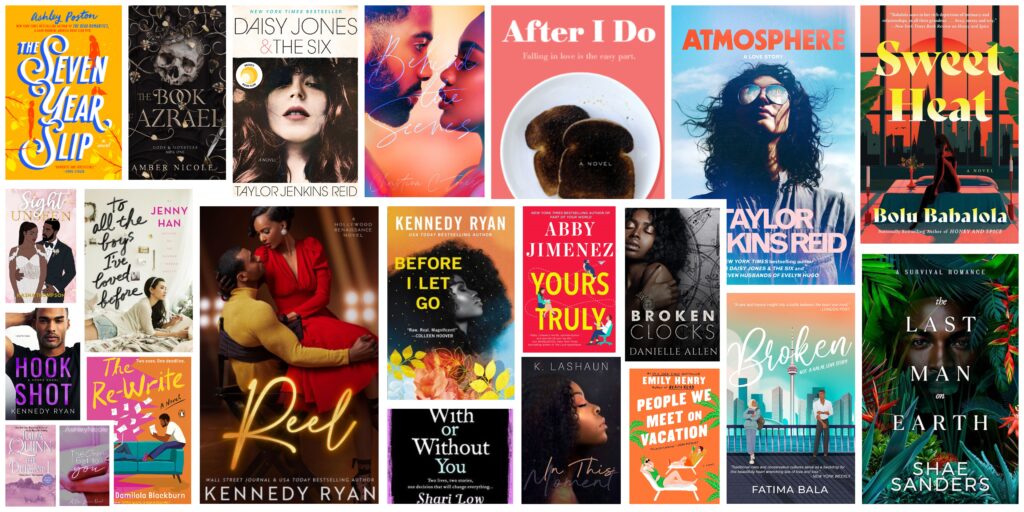
I have many books by Kennedy Ryan that I absolutely love. She is a master at weaving very real-life issues into a romantic arc, and that is where she truly shines. Reel explores living with chronic illness and the impact it has on Black women and their ability to thrive. Can’t Get Enough delves into the experience of being a caregiver and what happens when family members fall ill. Long Shot takes on domestic abuse and the long-term mental effects it leaves behind.
Before I Let Go portrays depression, child loss, and how these experiences can shake relationships and marriages. She represents so many real-life struggles that many of us face — and does so beautifully — reminding us that even in life’s hardest moments, love can and does still find you.
Fast by Millie Belizaire was one of the first romance novels I ever recommended on this blog. I read it over five years ago now, and it has stayed with me ever since. I always recommend it, though I do warn readers that despite being a romance, it’s a harrowing story. The relationship itself takes a back seat to what is essentially a multigenerational journey of trauma, healing, self-discovery, and overcoming. That is what made it so powerful for me — and the relationship that grows from the heroine’s journey becomes the satisfying cherry on top of an already deeply emotional payoff.
I remember the day I read Broken Clocks by Danielle Allen. As much as I want everyone to read it, I always tell people to brace themselves for a heartbreaking yet beautiful love story. It’s unconventional, especially for a traditional romance novel, and I couldn’t believe how it ended. But I still wholeheartedly recommend it.
The Closer I Get to You by Ashley Nicole is one of the best romance novels I have ever read. I’ve read and reread it countless times, and each time it still hits the mark. It’s a heart-wrenching story about a traumatic past and the long road to healing. I love that it tackles abuse from a perspective we don’t often get to see, and it is handled with so much care. Nothing about it is easy or linear, but the payoff in the end surpasses anything you could ever expect.
In Atmosphere, Taylor Jenkins Reid explores what happens when love is deemed unacceptable by society, and the lengths people go to in confronting homophobia while hiding important parts of themselves.
These are just a few examples of romance novels that speak so deeply to society and human experiences while still focusing on and fleshing out a coherent love story that we can all fall in love with.
Final Thoughts
When I think about romance and how much I love the genre, these are the stories that come to mind — the ones that teach me about the world, about humans, about life, and about emotions. That’s not to discredit lighter romances, because they have their place too. Not every book needs to change your life, especially when some topics can be extremely triggering. I just love reading stories that make me feel deeply, and no genre does that quite like romance.
Thank you for reading this post, and I hope you’ve enjoyed our romance exploration this month!
Signed,