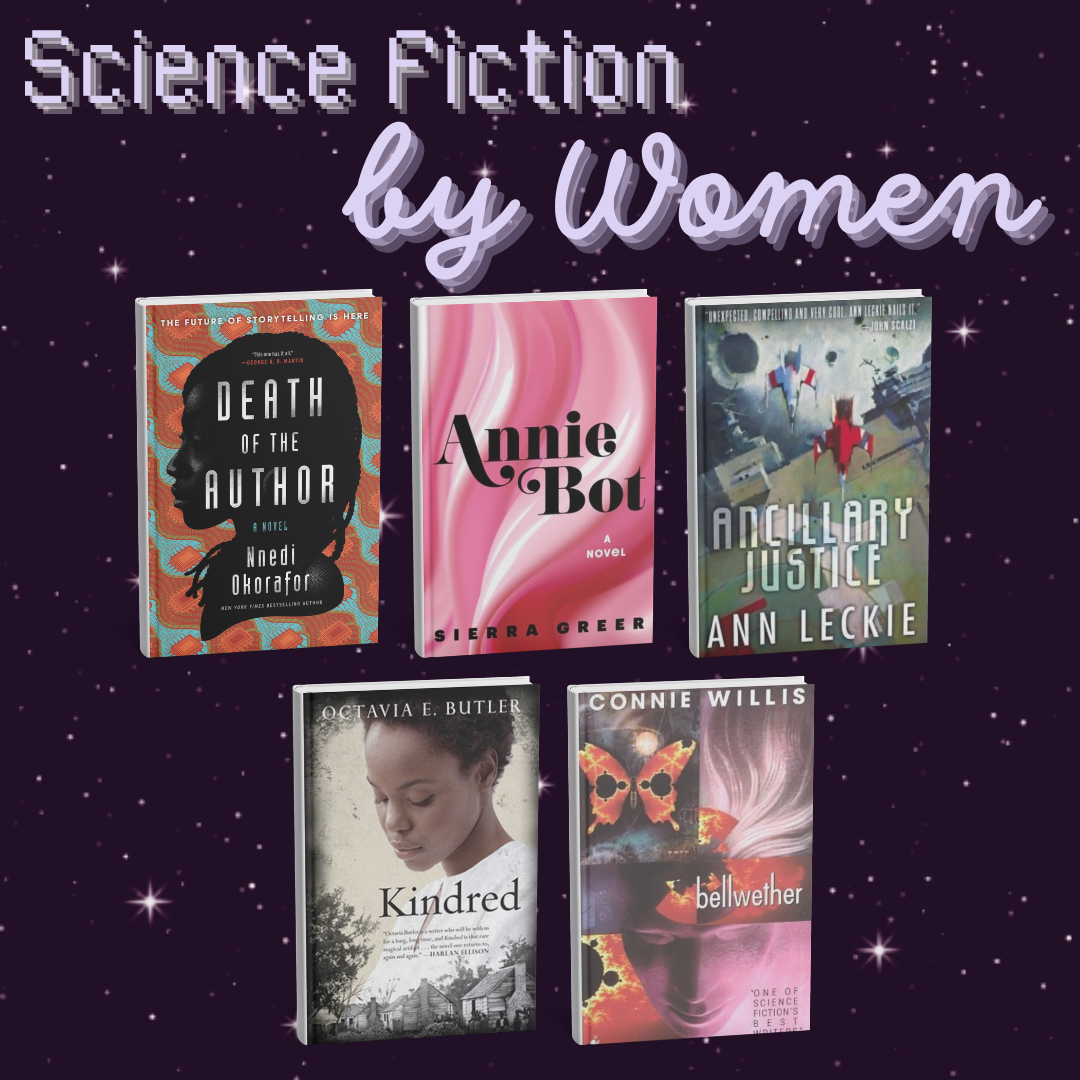
Science Fiction stories written by Women.
To continue my Women’s History Month theme, I’ve been considering what book recommendations to offer. Women are largely well represented in the literary world as both primary consumers and writers. However, one area where they remain significantly underrepresented is speculative fiction—particularly science fiction.
Despite early contributions from the likes of Mary Shelley with *Frankenstein*, women were still largely underrepresented in 20th-century science fiction. A 1948 survey found only 10–15% of science fiction writers were female. That number grew to about a third by the 1990s, but publishing data from 2013 to 2015 showed that men still outnumbered women roughly two to one among active English-language speculative fiction writers. Additionally, more than three in four books reviewed in sci-fi publications were written by men.
Data from 2020 revealed that in adult science fiction, women made up about 22.6% of authors, while men accounted for 69.4%. Though women have achieved close to 50% representation in speculative fiction overall (including fantasy), they remain less represented in “hard” science fiction.
These figures stem from a number of factors. Science fiction has historically been seen as a boys’ club—a genre oriented to be by men and for men (much as romance has been by women and for women). The issue is compounded by the perception of science fiction as more highbrow and intellectually validated, a status that has long been dominated by men. Women’s writing has often been dismissed or reclassified as “just fantasy” rather than the higher-status “science fiction,” contributing to the perception that fewer female sci-fi authors exist.
Marketing also plays a role. The genre has traditionally been marketed toward young men, and studies suggest that female authors face bias, with some indicating higher success rates for manuscripts submitted under male or neutral names.
Despite these challenges, many of the most acclaimed modern science fiction works are written by women. Barriers are consistently being broken in the drive to include women not only in the writing of science fiction but also in its recognition.
For this reason, I am spotlighting women authors in science fiction—some I have read, and some I have not yet, but all I am excited to explore.
Kindred – Octavia E. Butler
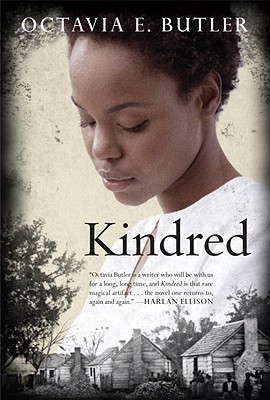
A young Black woman writer in 1970s Los Angeles is mysteriously pulled back in time to a pre-Civil War Maryland plantation, where she must repeatedly save the life of her white slaveholding ancestor to ensure her own existence. Each trip grows more harrowing as she confronts the brutal realities of slavery and the complex ties that bind her to the past.
A book I’ve been avoiding for months, but still badly want to read. I find slavery-era stories very difficult, but it’s rare to see that subject blended with science fiction, and though the content may be harrowing, the premise is so compelling I know I have to read it eventually. Octavia E. Butler was a powerful Black voice in science fiction. She was named the inaugural recipient of the Science Fiction & Fantasy Writers’ Infinity Award in 2023, an honour recognising authors who died before they could be considered for the Grand Master Award.
Death of the Author by Nnedi Okafor
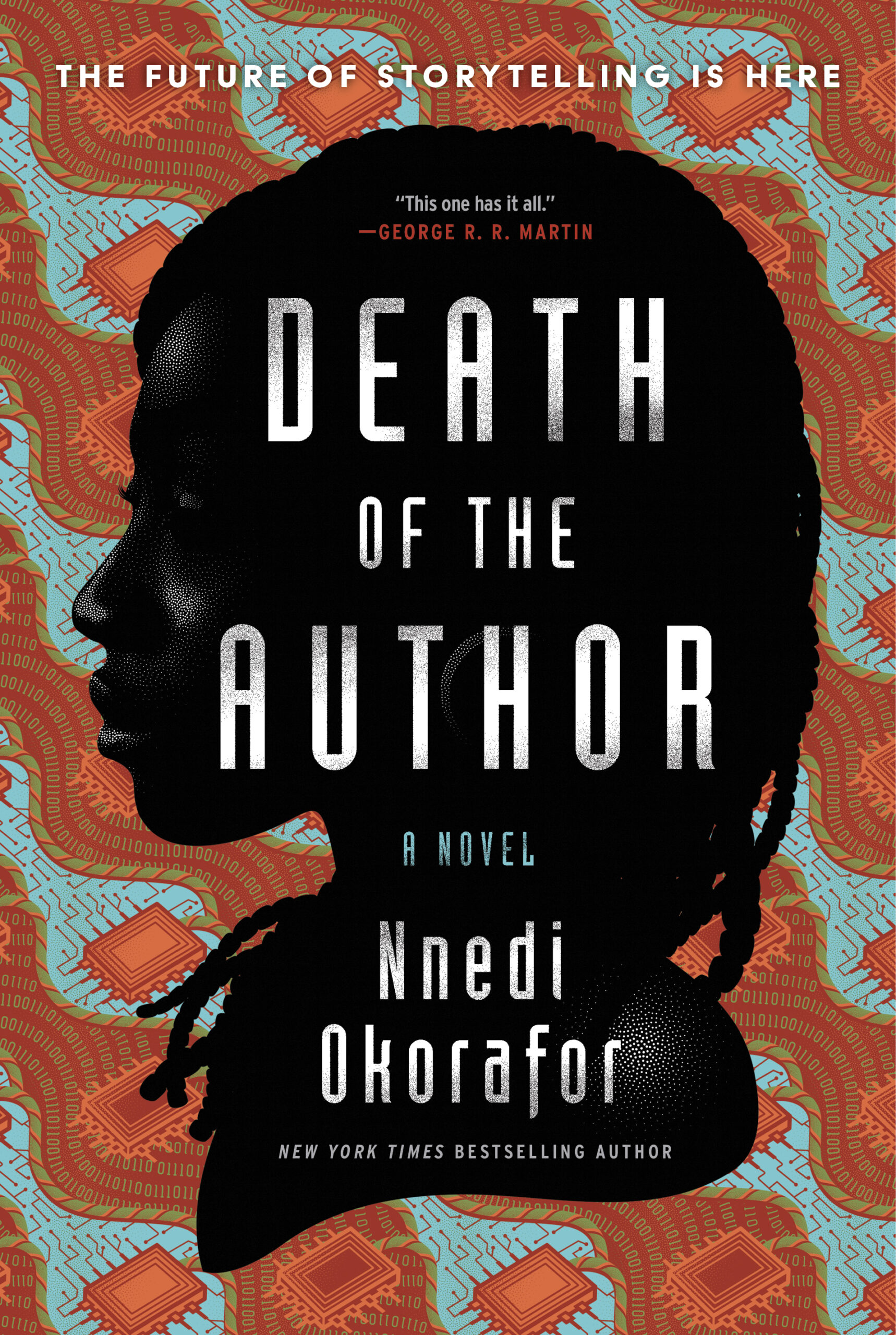
Death of the Author follows Zelu, a disabled Nigerian American writer whose life is upended when her unexpected sci-fi novel becomes a massive bestseller. As she navigates family pressure, sudden fame, and questions of authenticity, the lines between her reality and the post-human world of her fiction begin to blur in surprising ways.
I read Death of the Author this year and really enjoyed it. It encompasses a wide range, from science fiction elements to family relationships and cultural nuances. I loved how the story blended near-future and far-future narratives to tell something truly compelling. What really stood out to me is that this is a book within a book: a science fiction narrative housed inside a literary fiction framework. It’s definitely an entry-level read if you’re unsure where to start with the genre. It was nothing like what I expected going in.
Annie Bot – Sierra Greer
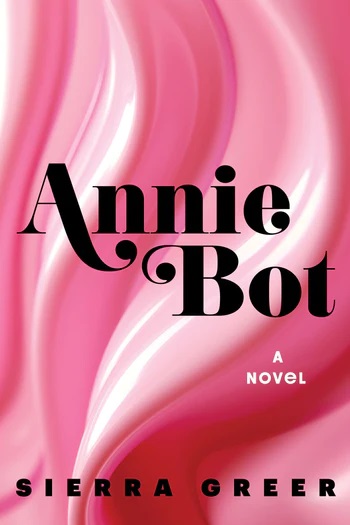
Annie, a sophisticated android designed to anticipate and please her owner, begins developing unexpected emotions, curiosity, and self-awareness. As she navigates jealousy, desire, and the desire for autonomy, she is forced to confront uncomfortable questions about programming, consent, power, and what it truly means to be human in an imbalanced relationship.
I read Annie Bot last year after stumbling upon it at a bookstore, and ended up reading half the book on the floor of Foyles. I wrote a full review, so definitely check that out. It’s a science fiction story that feels more imminent than some others on this list, blending near-future concerns with ongoing conversations about misogyny and womanhood in a way that feels both obvious and necessary.
Ancillary Justice – Ann Leckie
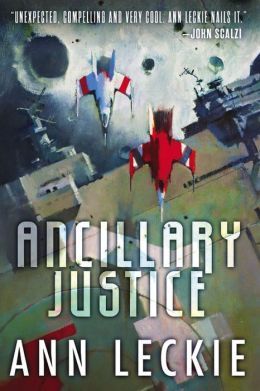
Once a powerful starship with thousands of ancillary bodies, Breq now inhabits a single human form and seeks revenge against the ruler who destroyed her. Travelling across the galaxy, she unravels secrets about empire, identity, and justice while confronting the remnants of her own fragmented consciousness and the civilisation she once served.
This is the most traditional science fiction novel on the list—set thousands of years in the future and in space, it covers all the classic genre elements. It’s also the only novel to have won the Hugo, Nebula, and Arthur C. Clarke awards, which lends considerable legitimacy to the story. I really enjoy science fiction in film, but have never explored it at this level in literary fiction, so I’m excited to read it.
Bellweather – Connie Willis
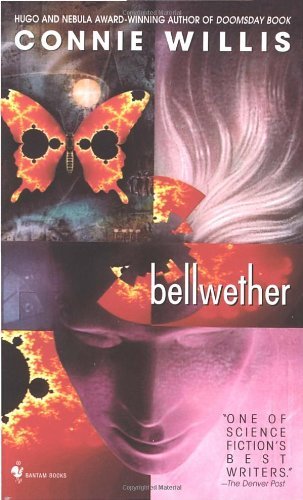
A quirky sociologist studying the science of fads and a chaotic yet brilliant scientist collide in this witty novel about herd mentality, innovation, and the unpredictable nature of change. As they navigate corporate absurdities and unexpected chemistry, they discover that true breakthroughs often begin one small, accidental ripple at a time.
Connie Willis has won more Hugo and Nebula awards than any other science fiction author and absolutely belongs on any spotlight list. I’ve been told this story is less traditional science fiction and more fiction about science, with humour and romantic elements woven throughout. The reviews I’ve seen are overwhelmingly positive, and I’m increasingly intrigued by Willis’s catalogue. Definitely one for the reading list.
I’m really looking forward to reading the stories on this list that I haven’t yet explored. Researching for this post has also opened me up to even more science fiction authors I’m excited to discover. If you’ve read any of these, do let me know—I have quite high expectations! I’ve been getting really into less magical and more analytical speculative fiction, which I hope sets me up well for more science fiction stories. Fingers crossed!
Try out this list on GoodReads for more stories. I’m not sure they all technically count as science fiction, but there are some speculative fiction overlaps—like in The Hunger Games or Margaret Atwood’s The Handmaid’s Tale, which blend science fiction with dystopian elements.
I hope you enjoy this recommendations list and see you Friday for my next review!!
Thanks for reading!
Signed,