
Project Hail Mary by Andy Weir
Book Published: 2021 | Movie Released: 2026 | Genre: Science Fiction
Project Hail Mary first appeared on my radar last month, when the first trailer for the movie dropped. A friend shared it with me and suggested we co-read before the film came out. This was an idea that felt even better when I realised the book was written by Andy Weir, who also wrote The Martian. While I’ve never read The Martian, it’s a film I absolutely loved, so my expectations were already high.
I love sci-fi, and I loved Project Hail Mary as both a book and a movie, and I can confidently say it’s probably one of the best adaptations I’ve ever experienced. This is a film that takes the very best parts of the novel and translates them beautifully to the screen. Sonically, it’s stunning. The cinematography is on point, and most importantly, it retains all the heart and soul necessary to carry the story. Everything I’ve watched and read about the film since seeing it has only reinforced how much care, intention, and genuine commitment went into both the filmmaking and the storytelling. I’m so excited to take you through this Book vs Screen adaptation of Project Hail Mary.
Synopsis
Ryland Grace is the sole survivor on a desperate, last-chance mission – and if he fails, humanity and the earth itself will perish. Except that right now, he doesn’t know that. He can’t even remember his own name, let alone the nature of his assignment or how to complete it. All he knows is that he’s been asleep for a very, very long time. And he’s just been awakened to find himself millions of miles from home, with nothing but two corpses for company.
His crewmates dead, his memories fuzzily returning, he realises that an impossible task now confronts him. Alone on this tiny ship that’s been cobbled together by every government and space agency on the planet and hurled into the depths of space, it’s up to him to conquer an extinction-level threat to our species.
And thanks to an unexpected ally, he just might have a chance.
Why This Adaptation Works
It is a Good FILM
Before the film’s release, the audiobook narrated by Ray Porter was already considered the “gold standard” for the story. It was the primary way I consumed the story, and it made me wonder how the film would translate. The first thing Project Hail Mary gets right is that it stands on its own as a film. And doesn’t try to be what it is not. Even without prior knowledge of the book, it stands on its own as an engaging and satisfying experience. If I’d walked into the cinema completely blind, I still think I would have had a great time.
It’s also a genuinely stunning piece of filmmaking. There’s a real sense of spectacle throughout, and it knows when to lean into the scale and high stakes, and when to pull back. The music and cinematography elevate those moments, creating an immersive experience that feels both sweeping yet intimate. There’s a tangible quality to the visuals, too, with a clear emphasis on practical sets that ground the story with little overreliance on CGI.
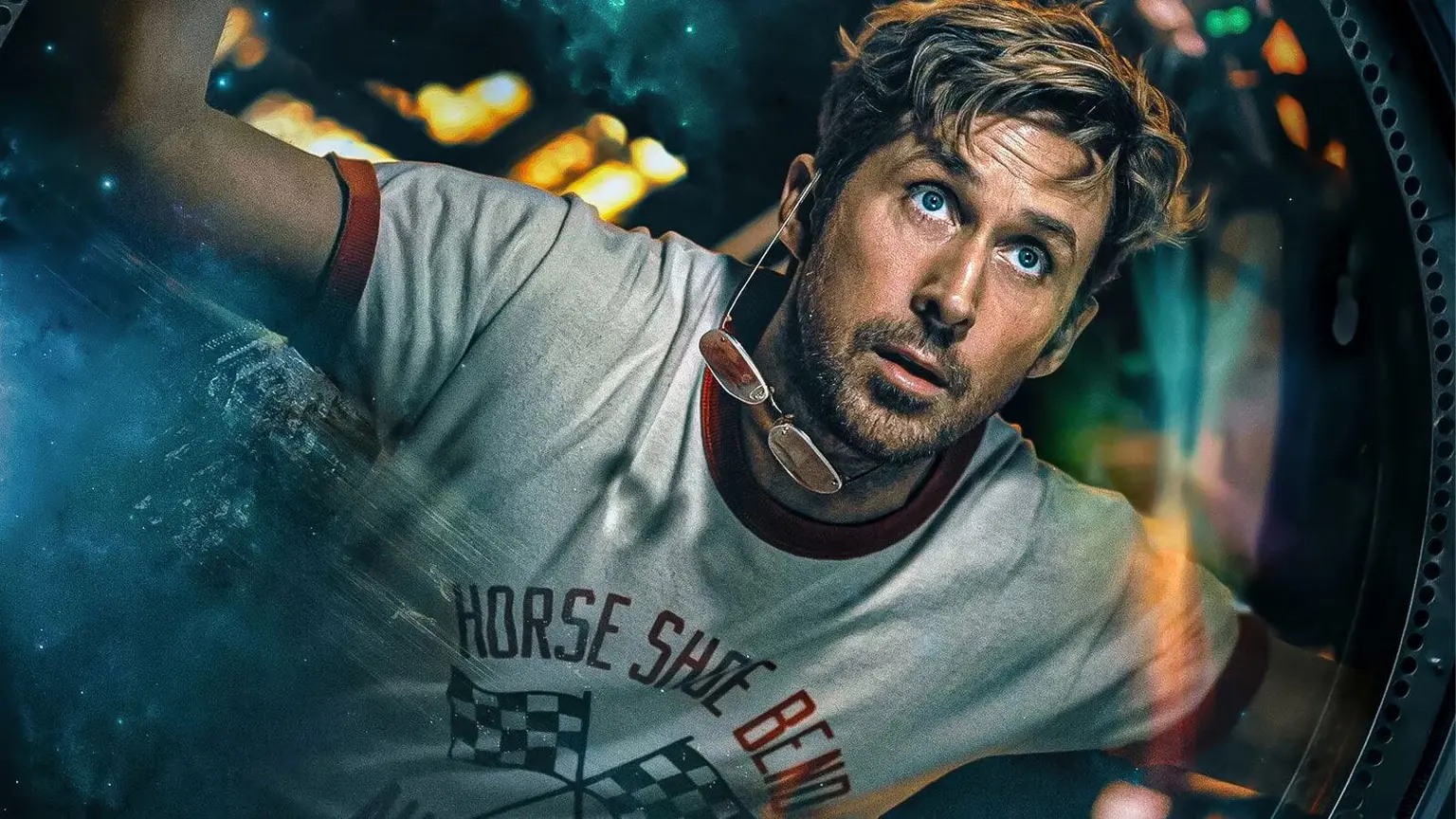
What the film does particularly well is it translates the “unfilmable” elements of the book with intention. The novel’s first-person narration is so rooted in internal thought, problem-solving, and scientific reasoning — things that don’t naturally translate to the screen. The film understands this limitation and responds creatively by externalising those processes so the audience can engage with them visually and emotionally.
One of the most effective choices is the use of mini video diaries — a device not present in the book. These moments offer insight into Grace’s thoughts beyond simple data logging, while also serving a narrative purpose as a way of relaying information back to Earth. It’s a smart, efficient solution that feels organic to the story.
The addition of Carl also plays into this. While he brings a welcome touch of humour, his more important role is as a sounding board for Grace. Through their interactions, we again gain access to Grace’s reasoning, doubts, and emotional state while he’s on earth, in a way that replaces internal monologue without feeling forced.
Ultimately, a strong adaptation recognises what can’t be carried over directly and finds creative, deliberate ways to translate it. Project Hail Mary doesn’t ignore those challenges — it leans into them, and that’s exactly why it works.
It Protects the Heart of the Story
For me, a strong adaptation isn’t about recreating every scene exactly as written, but about preserving the feeling and emotional impact of the original story. The film of Project Hail Mary captures that heart beautifully. I felt the same emotional pull watching it as I did reading the book, with the key beats landing in all the right places, even when the details looked different.
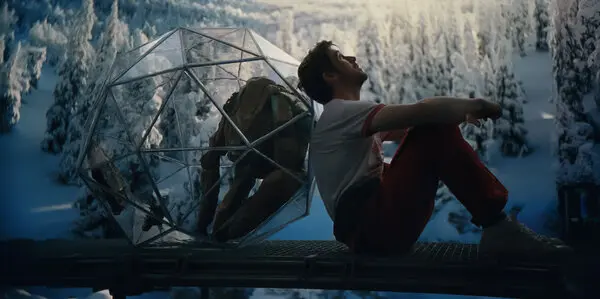
This is where the film shines most. It preserves the emotional core so well that, even knowing what was coming, the moments still hit just as hard. Grace and Rocky meeting for the first time, the quiet build of trust, the overwhelming sense of hope and connection — it all lands with the same weight. Two beings from opposite ends of the universe, with almost nothing in common, slowly learning how to communicate, collaborate, and ultimately care for one another. Their bond becomes something far more meaningful than the crisis surrounding them, offering so much to reflect on beyond the immediate stakes.
With a limited runtime — short of turning it into a four-hour epic (which, honestly, I wouldn’t complain about) — the best an adaptation can do is protect the soul of the story. And Project Hail Mary does exactly that, keeping its heart intact despite the changes needed for the screen.
Character Voice & Performance
Ryland Grace
Ryan Gosling delivers such a compelling take on Ryland Grace that it genuinely surprised me. I’ve always liked Grace in the book, but at times he feels more like a vehicle for the science — the eyes and voice guiding us through what’s happening — rather than a fully realised character. While his dynamic with Rocky deepens him, the spotlight often shifts elsewhere. Rocky, in many ways, steals the show, and even Stratt can command attention with her sheer presence.
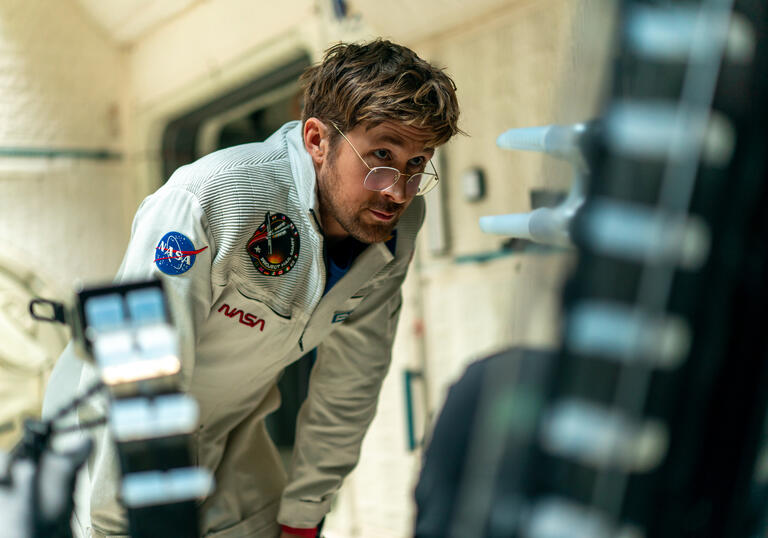
The film changes that. Gosling gives us a version of Grace who feels more grounded, human, and emotionally accessible. He leans into the humour and vulnerability, making Grace not just someone we follow, but someone we actively root for. While Rocky remains the emotional anchor, Grace becomes a character you can truly connect with — witty, fallible, and deeply relatable.
ROCKY!
Even though he’s vividly described in the book, there’s always a gap between description and imagination. Seeing him on screen, though, it just clicks — that’s Rocky. Exactly as he should be.
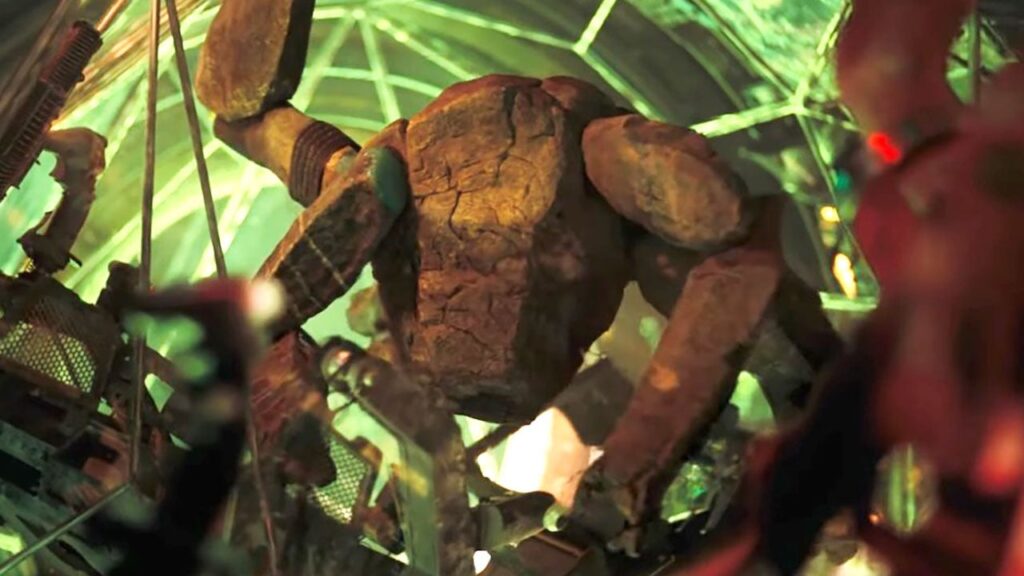
Before even getting into his characterisation, the production work behind him is remarkable. Learning that Rocky was realised as a puppet rather than relying purely on CGI adds an entirely new layer of appreciation. It means the filmmakers weren’t just thinking about visual chemistry, but physical interaction too — how Rocky and Grace move around each other, how their presence shares space. That tactile quality makes their relationship feel far more real and immediate, and it’s the kind of detail that quietly elevates the entire film.
As a character, Rocky’s transition to the screen is incredibly impressive. Adapting him was never going to be straightforward — his language, his form of communication, even his physicality are completely alien. He’s a faceless, non-human character, yet highly expressive and deeply intelligent. The film does a beautiful job of making him feel warm, engaging, and emotionally legible despite those barriers.
That said, I do think the adaptation softens one aspect of him slightly. Rocky comes across more as a fun, capable companion, whereas in the book, his engineering brilliance feels more pronounced. The Eridians may not share humanity’s exact scientific framework, but they are clearly highly advanced — their very presence in space is proof of that. I would have loved a bit more emphasis on just how formidable his intellect is.
Even so, what the film achieves with Rocky is no small feat. It takes a character who, on paper, shouldn’t fully translate to the screen and turns him into one of the most memorable, emotionally resonant parts of the story.
The Science
The book is undeniably very science-heavy — not in a way that detracts from the experience, but in how deeply it immerses you in the technical details. The flashbacks, in particular, go into significant depth about how scientists come to understand astrophage: its biology, its behaviour, even its predators, alongside the physics of interstellar travel.
The film adaptation of Project Hail Mary makes all of this far more digestible for the average viewer. It doesn’t so much as “dumb down” the science but streamlines it. Even while reading, much of the complex detail completely went over my head, and this is with my own science background. Translating that level of detail directly to the screen would likely slow the pacing and risk losing the audience.
What the film does instead is teach the science in a way that feels intuitive and engaging. It often mirrors a classroom-style approach — breaking things down through demonstration rather than explanation. The scene where Grace and Carl recreate Venus’s atmosphere is a perfect example of this. Visualisation does so much of the heavy lifting, allowing the audience to see the concepts rather than struggle through dense exposition.
And where the film can’t fully explain something, it doesn’t overcompensate. It provides just enough information to ground the moment, then trusts the audience to follow along. That balance is key. There’s a strong emphasis on showing rather than telling, which feels particularly refreshing — especially in a genre that can so easily lean into over-explanation.
Changes I Missed
I think Project Hail Mary is nearly perfect as a film, and I understand why certain parts were cut to keep the focus on the relationship between Rocky and Grace, and on the central themes of hope and friendship. That said, I really wish they had included more of what was happening on Earth.
In the book, there’s so much detail about the extreme, often chaotic measures humanity takes to buy some time. The world is essentially going a little insane, and those desperate, sometimes unbelievable efforts really raise the stakes. You feel just how close everything is to collapse.
Stratt, in particular, is such a compelling character in those moments. She makes decisions that outright break laws, and the courtroom scene where she defends those choices is incredibly powerful—I would have loved to see that translated onto the screen.
I also think there was an opportunity to explore a slightly different kind of message about humanity. Instead of the usual “the rich escape and abandon everyone” narrative we see in a lot of existential crisis films, this story leans more into what happens when the world has no choice but to come together. Even a glimpse of that on screen could have added another layer of depth and made the stakes feel even more real.
“I spend a lot of time un-suiciding this suicide mission.”
Andy Weir, Project Hail Mary
Smaller things I wish were included were more emphasis on the fact that Rocky had been travelling for far longer than Grace had even been alive, and was alone for much of that time. It added to the way in which we felt and responded to Rocky.
I would have also enjoyed a look into the gene for sustaining a prolonged comatose state. It serves as an explanation for why Grace is the only one who survived and why they were comatose in the first place.
Critique
My main critique isn’t really a flaw so much as an inevitability of adaptation — film simply doesn’t have the same space as a novel. That said, parts of Project Hail Mary do feel a little rushed on screen.
In the book, we spend months with Grace and Rocky. That time allows their relationship to develop gradually and meaningfully — we see them learn, fail, adapt, and repeatedly risk their lives for one another. There’s room to sit with the details of their mission, to fully understand what goes wrong and how they respond, and to feel the weight behind every decision.
Because of that, certain moments carry more depth on the page — particularly Grace’s decision to go back for Rocky. In the novel, that choice is layered with uncertainty, risk, and the very real possibility that he might not find him at all. On screen, it still works, but it moves much more quickly, without quite the same emotional and narrative build-up.
To the film’s credit, it doesn’t remove anything essential. If you hadn’t read the book, you likely wouldn’t feel that anything is missing. But having that prior knowledge does make the absence of those quieter, more detailed moments noticeable. There’s a richness to their journey that inevitably gets compressed.
It’s the kind of story that could easily have benefited from more time to breathe — and I won’t lie, I’d happily watch a much longer, uncut version just to sit in those moments a little more.
Final Thoughts
Overall, this is an absolute must-watch — one I’d recommend to any cinema-goer. Project Hail Mary works beautifully in both forms, and how you approach it really depends on what you enjoy most.
If you love hard sci-fi, it’s worth reading the book first and then watching the film. If the technical detail isn’t your main draw, the film is a fantastic entry point, with the book offering a deeper, more layered experience afterwards. And if you’re drawn to character-driven sci-fi — stories built on friendship, hope, and found family — the order hardly matters. Both versions deliver.
This is one of those rare adaptations where experiencing both feels essential. Rather than one replacing the other, they complement each other, each excelling in its own medium. It genuinely feels like a case where we’ve won twice — a 10/10 adaptation.
I hope you’ve enjoyed this edition of book vs screen, one I have been looking forward to writing for weeks! Stay tuned for the upcoming posts this month.
Signed,