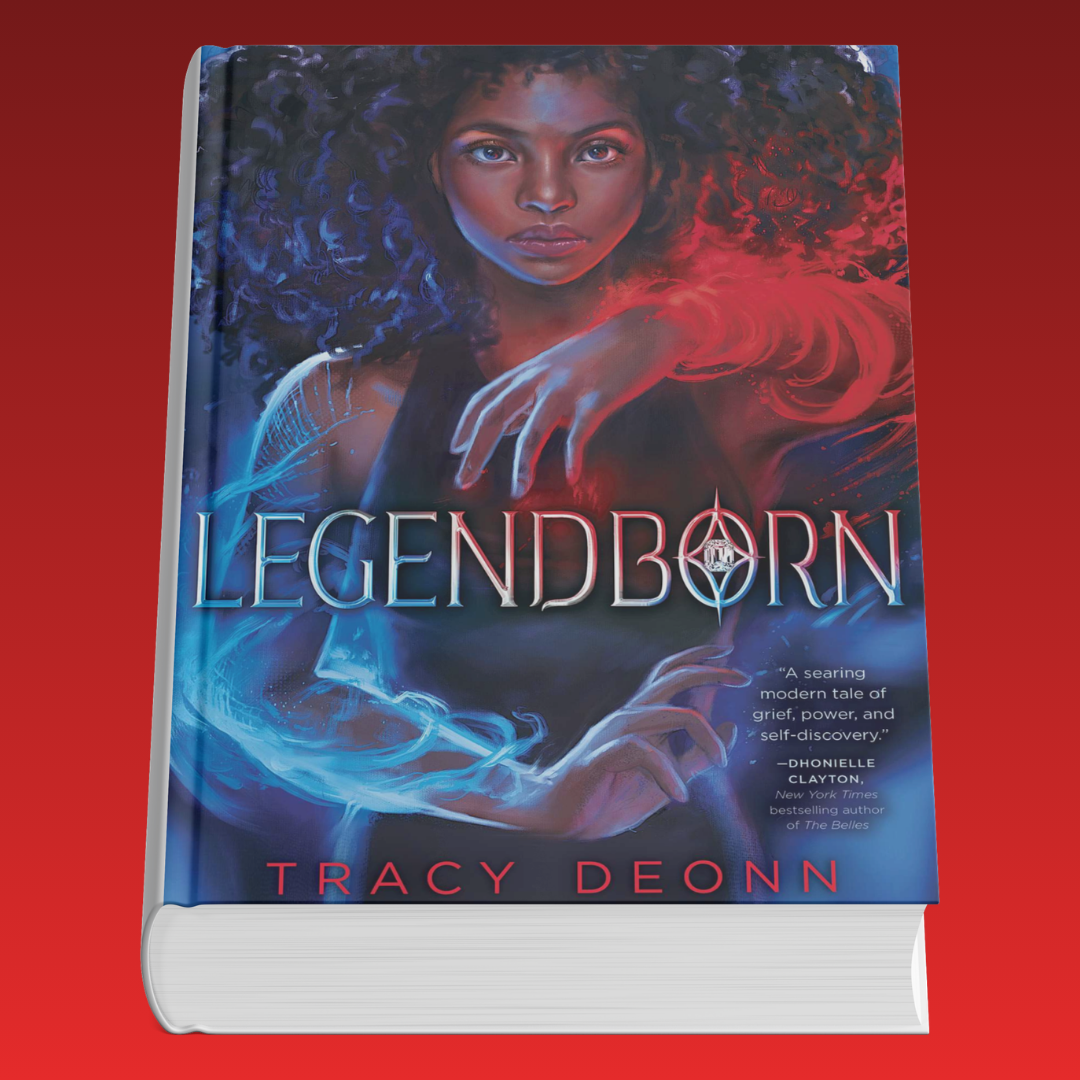
Legendborn by Tracy Deonn
Genre: Young Adult Fantasy | Published: 2020
I don’t usually get swept up in BookTok recommendations. Outside of romance, I’m not particularly drawn to the genres that tend to dominate that space—especially romantasy. I’ve also found that what’s widely hailed as “the best book ever” doesn’t always land the same way for me. That said, I’m still curious enough to see what all the hype is about.
Legendborn is one of those books. Not to discount the fact that it’s also a young adult fantasy, a genre I also tend to avoid. At 26, reading about teenagers doesn’t particularly hold my attention in the same way it once did. And yet, I kept hearing about this book. Not just online, but from people whose reading tastes I genuinely trust. The ratings are strong, the reviews even stronger, and eventually I thought—why not?
So I picked it up, and I had a genuinely good time. While I was especially taken with the unique magic system and the fresh reimagining of the King Arthur legends, the emotional core of the story is what really hit for me. That said, I did have a few issues along the way — this wasn’t a flawless read for me by any means.
I initially rated it 4.25 stars when I finished it, but we’ll see if that still holds by the time I’ve worked through this review.
Synopsis
After her mother dies in an accident, sixteen-year-old Bree Matthews wants nothing to do with her family’s memories or childhood home. A residential program for bright high schoolers seems like the perfect escape — until Bree witnesses a magical attack her very first night on campus.
A flying demon feeding on human energies, a secret society of so-called “Legendborn” students that hunt the creatures down and a mysterious teenage mage who calls himself a “Merlin” and who attempts — and fails — to wipe Bree’s memory of everything she saw.
The mage’s failure unlocks Bree’s own unique magic and a buried memory: the night her mother died. Now that Bree knows there’s more to her mother’s death, she’ll do whatever it takes to find out the truth.
She recruits Nick, a self-exiled Legendborn with his own grudge against the group, and their reluctant partnership pulls them deeper into the society’s secrets — and closer to each other. But the more she learns, the more Bree has to decide how far she’ll go for the truth.
Writing Style
I’m going to start off with the writing style and my overall feel of the book before going into detail about specific elements.
Considering the stakes of the story and the relatively young characters at its centre, you might expect Tracy Deonn to prioritise plot over prose—but that’s not the case at all. Even with a fast-paced narrative that moves through a significant amount of information quite quickly, she still makes space for her literary voice to come through, and when it does, it’s striking.
The writing is genuinely beautiful. I experienced the story through both the audiobook and the ebook, and that combination really allowed the prose to land. It’s at its strongest in the more intimate moments—when we’re inside Bree’s emotional world, exploring her relationship with her mother, or following her ancestral journey. Those sections feel rich, layered, and deeply affecting. I will expand on this in the next section.
In contrast, the prose feels less impactful when the focus shifts to explaining the mechanics of the magical world. That’s where things became a bit dense or rushed. But when Deonn leans into the emotional core of the story, it’s incredibly effective. Despite the fantastical elements, those moments feel grounded and human—you’re not just observing Bree’s journey, you’re feeling it alongside her.
And ultimately, that’s what stayed with me. As much as I enjoyed the plot and found the direction of the story compelling, despite my issues with the world-building and some character dynamics, which I will come to, it’s the emotional and historical depth that really stands out. That’s where this book truly shines.
Grief and Girlhood
I really loved the way grief is handled in Legendborn. It is a raw and honest portrayal of the mental and emotional toll loss can take, especially for a young girl who clearly had such a close bond with her mother. The story doesn’t shy away from the psychological aftermath of that kind of trauma, and it captures something important: grief is deeply personal, and it’s never linear. Across Bree’s journey, you see both healing and breaking in equal measure.
What makes it even more powerful is how her grief is intertwined with her identity as a Black girl navigating racism and inherited historical trauma—without her mother there to guide her through it. That absence feels especially significant in moments where cultural knowledge and understanding would have grounded her, especially considering what we eventually find out.
Rather than presenting grief as something to “get over,” the novel shows Bree learning to carry it. As she moves through increasingly dangerous and unfamiliar magical spaces, her pain doesn’t disappear—it evolves. Eventually, it becomes a source of strength: something she can channel, something that connects her not only to her mother but to a wider ancestral legacy.
There’s also something quite striking about how singularly focused Bree is on uncovering the truth about her mother’s death. In many ways, that drive acts as a distraction—an attempt to outrun her grief. But ironically, it’s that very pursuit that forces her to confront it head-on. That emotional depth, and the way it’s woven into the larger narrative, is easily the strongest aspect of the book for me.
“Don’t make your life about the loss. Make it about the love.”
Tracy Deonn, Legendborn
Power, Racism, and Institutions
I already appreciated the way Legendborn reworks Arthurian legend, but what stood out even more was how it interrogates both historical and modern systems of power. The question of who gets access to magic—who is protected by it, who is excluded from it, and how lineage dictates that access—is handled with real intent. The idea of “coloniser magic” is particularly striking; even when something is framed as noble or heroic, the reality of entrenched racism and inherited power structures inevitably seeps in.
What I found especially compelling was that the Legendborn order isn’t the only magical framework in the story. Rootcraft, grounded in African ancestral traditions, offers a powerful alternative—one that works with the land rather than extracting from it. That contrast adds depth and gives the narrative a much-needed counterpoint to the dominant system. Despite Bree being a Legendborn, it makes it clear that her presence here originated from violence, just like Black History in America.
That said, I do find something quite exhausting about stories where a lone Black girl is burdened with confronting centuries of institutional power almost entirely on her own. While it was meaningful that Bree had some support through the Black therapists connected to her mother, she is still, for the most part, isolated. And then, on top of that, she’s expected to place her trust in two white men—one of whom is directly tied to the very legacy of power and harm the story is critiquing. It’s… frustrating.
I’ll get more into the dynamics between Bree, Nick, and Sel later, but in terms of alliances and support systems, it did feel like a missed opportunity. Even within a space designed to be exclusionary and overwhelmingly white, the near-total absence of other Black characters in Bree’s immediate environment felt overemphasised. I understand that this reflects real-world dynamics, particularly in the American South and in elite academic spaces, but the story itself acknowledges that there were other Black students in the past. Because of that, the level of isolation Bree experiences sometimes felt less like realism and more like a narrative choice—and not one that fully worked for me.
Characters & Relationships
Bree
I liked Bree well enough, but she also embodies a lot of what tends to frustrate me about YA protagonists. She’s a teenager—bright, capable, and clearly intelligent—but still prone to impulsive decisions and emotional reactions that come with that stage of life. So it’s not that I disliked her; she just grated on me at times.
What grounded her, though, was the grief storyline. That thread adds real emotional weight and makes it much easier to connect with her. I also really appreciated the quieter moments that centre her Black identity—particularly the way she engages with her hair and the care, pride, and familiarity tied to it. Some might see those scenes as filler, but they humanise her in a space that otherwise feels anything but ordinary.
Nick, Selwyn… and that dreadful triangle
I’ll be honest—I hated this element. Completely. I don’t understand the need to force a romantic arc into a story that already has so much going on, especially one dealing with grief, systemic power, and identity. Of course, teenage crushes are realistic, and I wouldn’t have minded subtle hints of that. But here, it becomes far more central than it needs to be.
The dynamic with Nick already felt unnecessary—the whole blond-haired, blue-eyed “chosen one” energy didn’t add anything essential for me. But introducing a love triangle on top of that? Even worse. Why does Bree need to be torn between two people? What does that actually add to the narrative?
It’s particularly frustrating given the broader context. You have a Black girl who is already isolated within this world, now emotionally entangled between two white men—one who actively resents her and another who directly represents the legacy of power the story is critiquing. It leans into cliché in a way that feels not just tired, but slightly tone-deaf (Tracy Deonn being black does not negate this).
Everyone else
I understand the intention of founding a family here, but I didn’t fully buy into it. Bree does form connections, but many of them feel driven more by circumstance than genuine emotional development. We’re told these bonds are deep, but I didn’t always feel that on the page.
There’s also the issue of presence—her supposed best friend is absent for large stretches of the book, which weakens the emotional core of that relationship. And beyond a handful of characters, many of the others blur together to the point where they’re not particularly memorable.
So when the story asks us to feel the weight of certain events or losses later on, it didn’t quite land for me. The emotional payoff relies on connections I’m not entirely convinced were fully built.
Magic and Worldbuilding
I really enjoyed the reimagining of the Arthurian legend in Legendborn—the idea that descendants of Merlin and the Knights of the Round Table inherit their predecessors’ powers is compelling and, at its core, quite imaginative. It gives the story a strong foundation and a clear sense of legacy.
That said, I didn’t always feel fully grounded in how the world actually works. There were multiple points where I had to pause and look up terms just to remind myself who was who and how everything fit together. In theory, Bree being an outsider should have made this easier—her learning curve should mirror ours, allowing the world to unfold gradually and intuitively.
Instead, the narrative often withholds information from her, even once she’s inside the Order and actively participating in it. As a result, when explanations do come, they arrive as info dumps. Bree seems to grasp everything immediately, but as a reader, I didn’t always have the same space to process or retain that information. Very little is revisited or reinforced, so it can feel less like organic world-building and more like filling in gaps quickly to keep the plot moving.
This made it difficult at times to feel confident in my understanding of the magic system and its rules, or even what details were important enough to hold onto.
Additionally, the timeline doesn’t quite help. The story unfolds over just a few weeks, yet Bree becomes remarkably fluent in a complex magical system in that short span. Given how intricate the world is meant to be, that level of rapid mastery felt a bit unconvincing.
Final Thoughts
Overall, I really enjoyed Legendborn—and I think that’s largely because the elements that worked for me really worked. Even though I had clear issues with aspects of the world-building and some of the relationship dynamics, the strengths of the novel—particularly its emotional depth and thematic exploration—were strong enough that I could look past those shortcomings.
My original rating more or less holds. The reason it sits at 4 stars rather than 5 is that, despite its compelling ideas and genuinely moving subject matter, it still leans quite heavily on familiar YA tropes that didn’t always land for me. That said, those weaker elements never completely overshadowed my overall experience, which is why…
I would absolutely recommend it. As for whether I’ll be picking up Bloodmarked immediately, I’m not entirely sure. Legendborn ends in a place where I feel comfortable taking a pause, but I can definitely see myself continuing the series in the next month or two.
A win for BookTok, without a doubt.
Thank you so much for reading, and I’d love to hear your thoughts if you’ve read it!
Signed,